Ba
664- 332 a.C/ 664- 332 b.C.
Egipto/ Egypt
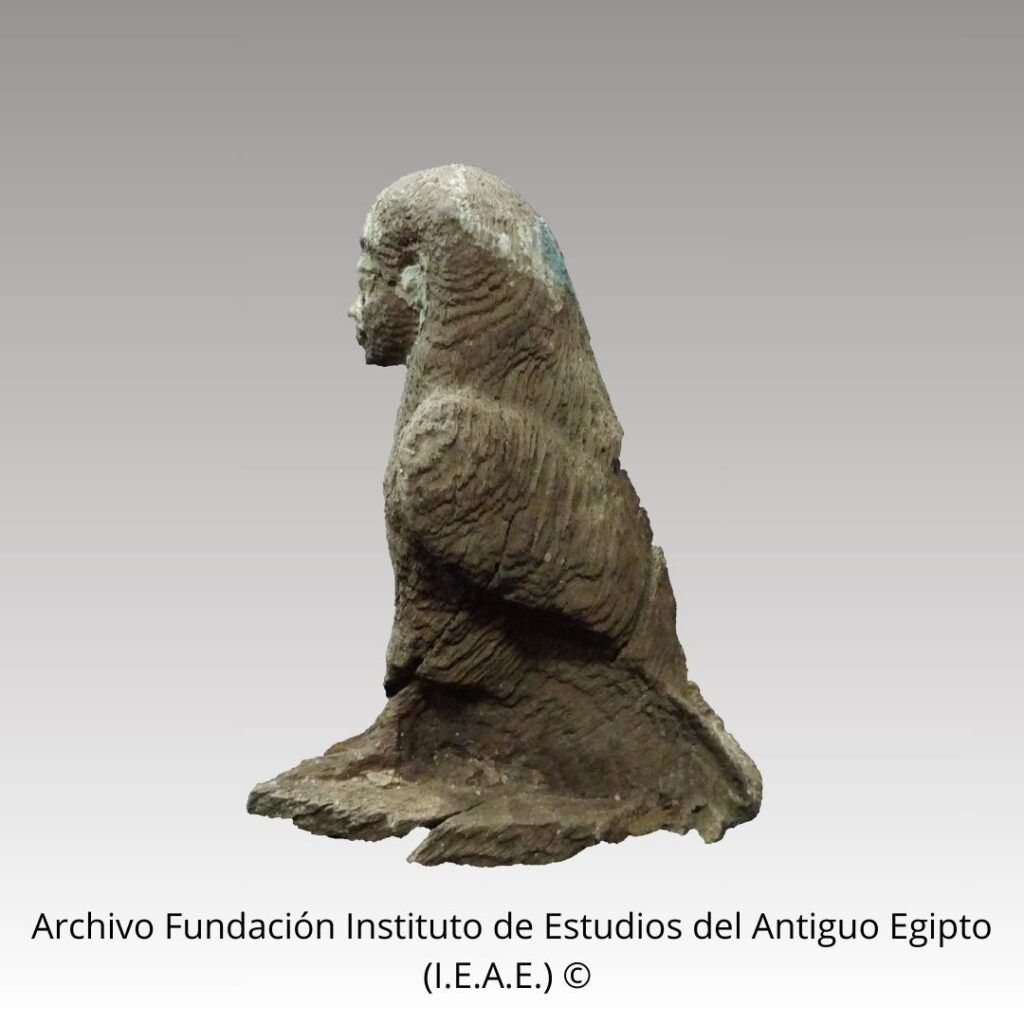
El pájaro Ba representaba el poder del halcón asimilado al dios Horus. Otorgaba poderío vital al hombre. También concedía a su portador, aún muerto, la facultad de la transformación para entrar y salir de la tumba en forma de halcón con cabeza humana.
Los antiguos egipcios creían que había ocho formas espirituales que componían el «alma» del difunto y pasaban a la siguiente vida. El Ba, junto con el Ka y el Anj, representaba un aspecto principal del alma. Otorgaron a este concepto, la el forma de pájaro, expresando así la movilidad del alma tras la muerte. El Ba, generalmente representado, como una cabeza humana, tomando prestados los rasgos faciales de la persona fallecida. El cuerpo y las alas extendidas eran las de un halcón, a menudo con manos humanas a los costados.
El Ba, era la encarnación de la personalidad del difunto.
Los egipcios creían que los pájaros simbolizaban la capacidad del alma de moverse libremente y volar entre el mundo de los vivos y el mundo del Más Allá.
Se creía que el Ba dejaba el cuerpo después de la muerte. De día, el Ba volaba y visitaba a sus pariente vivos, pero cada noche, volvía a la momia para unirse con las otras formas espirituales importantes como su Ka y asegurar la vida eterna.
El Ba, llevaba en general elementos propios de la vida cotidiana de los egipcios, como una peluca tripartita, una falsa barba y un collar ancho alrededor del cuello.
The Ba bird represented the power of the falcon, assimilated to the god Horus. It bestowed vital power upon man. It also granted its bearer, even in death, the ability to transform into and out of the tomb in the form of a falcon with a human head.
The ancient Egyptians believed that there were eight spiritual forms that comprised the «soul» of the deceased and passed into the afterlife. The Ba, along with the Ka and the Ankh, represented a principal aspect of the soul. They gave this concept the form of a bird, thus expressing the soul’s mobility after death. The Ba was generally depicted with a human head, borrowing the facial features of the deceased. The body and outstretched wings were those of a falcon, often with human hands at its sides.
The Ba was the embodiment of the deceased’s personality.
The Egyptians believed that birds symbolized the soul’s ability to move freely and fly between the world of the living and the world of the afterlife.
It was believed that the Ba left the body after death. By day, the Ba flew and visited its living relatives, but each night, it returned to the mummy to unite with other important spiritual forms, such as its Ka, and ensure eternal life.
The Ba generally wore elements typical of the daily life of the Egyptians, such as a tripartite wig, a false beard, and a wide necklace around the neck.
Detalles de la pieza/ Artwork Details
Talla de madera policromada, aunque en la actualidad muy perdid.
La imagen de Ba, tiene rostro humano, con los ojos muy marcados y una peluca tripartita con restos de color azul. En origen llevaba dos alas de color rojizo y estas se encontraban pegadas al cuerpo.
Polychrome wood carving, though now largely lost.
The image of Ba has a human face, with prominent eyes and a tripartite wig with traces of blue paint. Originally, it had two reddish wings attached to its body.
Ficha técnica / Overview:
Campaña / Season: 2014.
Título / Title: Ba.
Periodo:/ Period: Periodo Ptolemaico 332 a.C.-Periodo Romano 395 d.C / Ptolemaic period 332 b.C.- Roman Period 395 a.C..
Cronología / Chronology: Dinastía Macedónica 332 a.C.- 394 d.C. Macedonian Dynasty 332 b.C.- 395 a.C.
Procedencia / Origin: Tumba del Visir Amen-Hotep Huy AT-28-. Patio, zona norte. Asasif. Luxor West Bank.
Actualidad / Present : Luxor Museum.
Materia/ Materials talla de madera / carved wood.
Dimensiones: 7,9 cm. x 9,8 cm. x 3,6 cm.
NºRegistro: 9631-14.
Paralelos/ Parallels:
-
Museo de Turin, Cat.986
Bibliografía / Bibliography:
- Andrews, C.:Amulets of Ancient Egypt. British Museum, 1994.
- Bedman, T. Martín-Valentín, F y El Menshawy, A. (Eds.): Los Tesoros del Visir Amen-Hotep Huy. Catálogo de la Exposición, El Cairo, 2021.
- Martín Valentín, F. J. : Azules Egipcios. Pequeños tesoros del Arte: Los dioses y las cosmogonías. Barcelona, 2005 págs. 23-27.
- Martín Valentín, F. y Bedman, T (Ed.): Proyecto Visir Amen-Hotep Huy (Tumba AT-28-).Memoria preliminar 2009-2016. Misión Arqueológica española en Asasif (Luxor-Occidental). Málaga, 2017.
- Shaw, I.: Historia del Antiguo Egipto. Madrid, 2007, págs. 626-627.
Por: Teresa Bedman, Mario Calvo, Javier Chamorro, María Galvín, y Florencia Nicolari.