Tercer Período Intermedio 1069-664a.C. / Third Intermediate Period 1069-664 b.C.
Egipto / Egypt
Para los antiguos egipcios, el corazón (ib). El ib se recoge en el Libro de los Muertos en el capítulo 28B por lo tanto, para ellos, era el centro del pensamiento y el motor de los sentimientos y las acciones. Por lo que, este órgano, que recordaba las acciones realizadas en vida, y desempeñaba un papel fundamental para ayudar al difunto a alcanzar el más allá.
Durante la Ceremonia del Pesaje del Corazón, el corazón del difunto se colocaba en una balanza, mientras que en el otro platillo se sostenía una pluma de Maat, símbolo de justicia. Mientras tanto, el difunto hacía la «Confesión Negativa» de los pecados que no había cometido. Si la balanza no se movía, el difunto podía pasar al Más Allá. Por esta razón, el objeto se colocaba cerca del corazón, entre vendas de la momia, para proteger el órgano que quedaba en el cuerpo durante la momificación y asegurar respuestas positivas durante el pesaje, de modo que el difunto pudiera alcanzar la vida después de la muerte y su renacimiento.
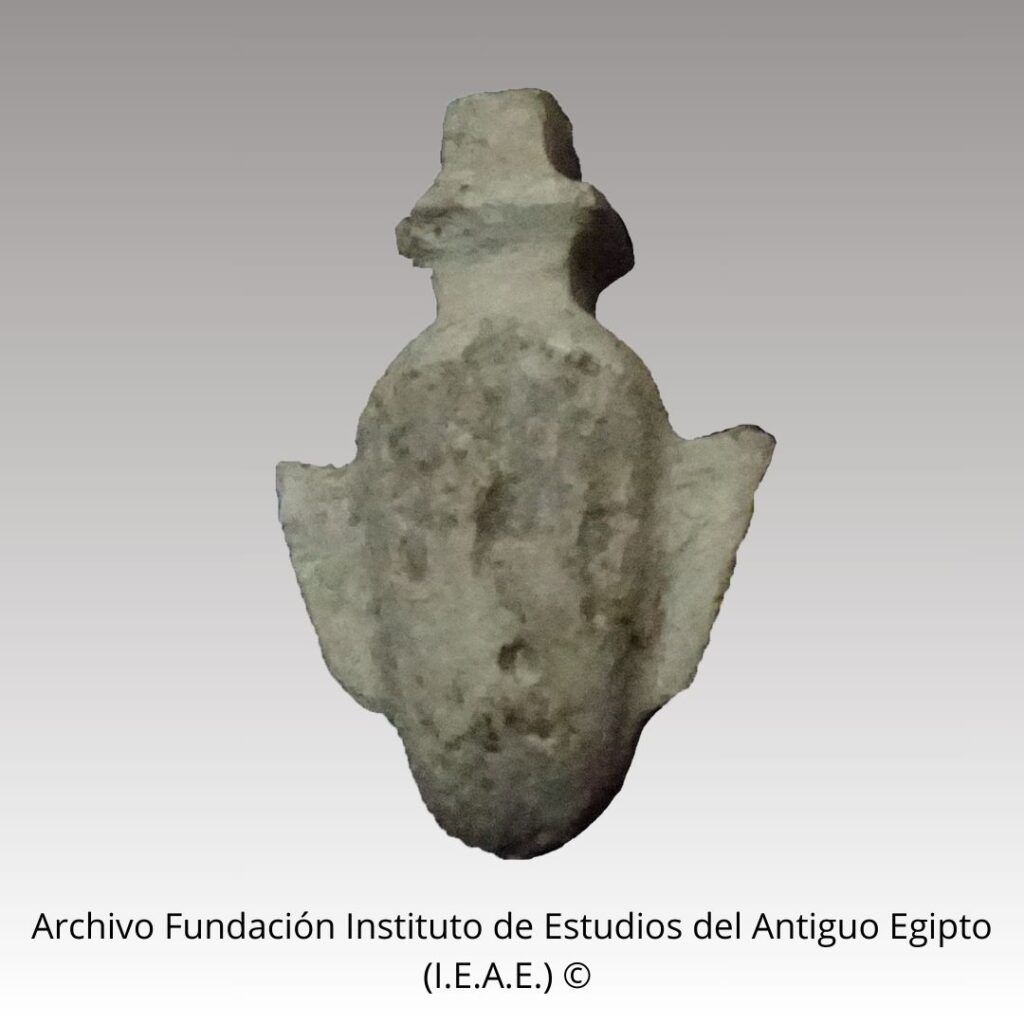
El corazón también desempeñaba un papel importante durante la Ceremonia de la Apertura de la Boca en el momento del entierro, cuando se ofrecía al difunto el corazón de un toro para restaurar sus facultades terrenales. No había diferencia en la representación del corazón como órgano animal o humano, pero la forma de los amuletos se asemejaba más a la de un animal. Se presenta típicamente como un vaso ovoide, más ancho en la parte superior, con un elemento similar a un asa a cada lado, que quizás indicaba venas y arterias, y un borde acampanado y aplanado en la parte superior.
La guía más importante para el más allá, el Libro de los Muertos, que incluye la Ceremonia del Pesaje del Corazón, sugiere el uso de amuletos de corazón, por lo que se generalizaron tras la introducción del Libro de los Muertos en el Imperio Nuevo y desempeñaron un papel importante en los ajuares funerarios hasta el final del período faraónico.
For the ancient Egyptians, the heart (ib)was mentioned in the Book of the Dead in chapter 28B. Therefore, for them, it was the center of thought and the driving force of feelings and actions. Therefore, this organ, which remembered the actions performed in life, played a fundamental role in helping the deceased reach the afterlife.
During the Weighing of the Heart Ceremony, the deceased’s heart was placed on a scale, while a feather of Maat, a symbol of justice, was held on the other side. Meanwhile, the deceased made the «Negative Confession» of the sins they had not committed. If the scales did not move, the deceased could pass into the Afterlife. For this reason, the object was placed near the heart, between the mummy’s bandages, to protect the organ that remained in the body during mummification and ensure positive responses during the weighing, so that the deceased could reach the afterlife and be reborn.
The heart also played an important role during the Opening of the Mouth Ceremony at the time of burial, when the deceased was offered a bull’s heart to restore their earthly faculties. There was no difference in the representation of the heart as an animal or human organ, but the shape of the amulets more closely resembled that of an animal. It was typically depicted as an ovoid vessel, wider at the top, with a handle-like element on each side, perhaps indicating veins and arteries, and a flared, flattened rim at the top.
The most important guide to the afterlife, the Book of the Dead, which includes the Weighing of the Heart Ceremony, suggests the use of heart amulets, so they became widespread after the introduction of the Book of the Dead in the New Kingdom and played an important role in grave goods until the end of the pharaonic period.
Detalles de la pieza / Artwork Details:
La forma de este amuleto es de buena talla. No tiene agujero para llevarlo colgado, por lo que nos indica que estuvo colocado entre las vendas de la Amuleti Ib – Ib Amulet, proximo a la zona de su corazón
The shape of this amulet is well carved. It has no hole for hanging, indicating that it was placed between the mummy’s bandages, near the area of her heart.