Tercer Periodo Intermedio 1069-664 a.C / Third Intermediate Period 1069-664 b.C.
Egipto/ Egypt
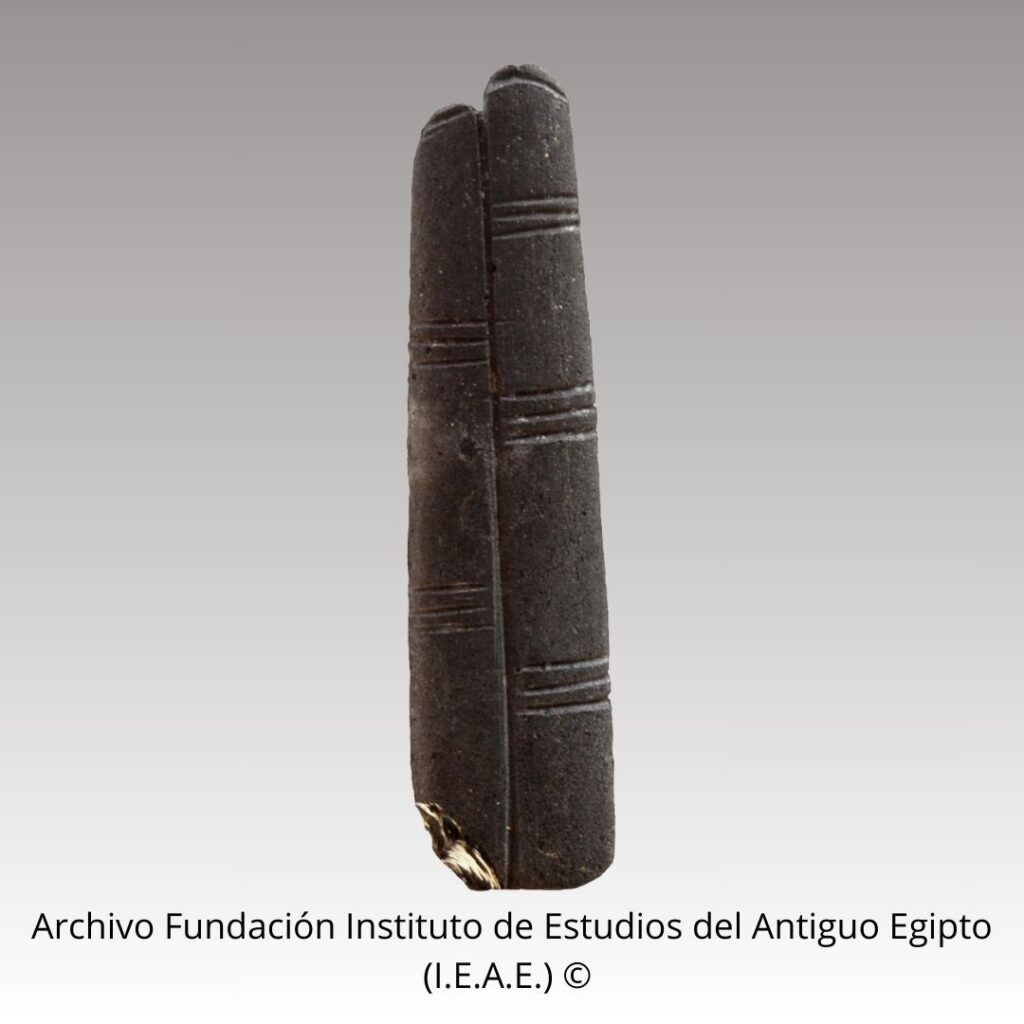
El amuleto Dyebaui,  también conocido como el amuleto de los dos dedos, era un símbolo mágico de ayuda, para superar el último estadio iniciático y asi lograr la transformación solar como Osiris ascendiendo por la escalera de Ra, por lo tanto, asociado a las entidades funerarias por su función para alcanzar el Más Allá.
Representa dos dedos (índice y corazón) y están asociados, con la ayuda que el dios Horus prestó a su padre Osiris, para ascender por la escalera hacia Ra.
Depositar este tipo de amuleto en la tumba no era casual; se asociaba a los rituales funerarios destinados a proteger al difunto en su camino al Más Allá. Según los Textos de las Pirámides, el amuleto Dyebaui buscaba específicamente garantizar la resurrección del monarca.
Así tenemos que, en la Invocación nº 30 de la Pirámide de Unas, se mencionan que los dos huesos de la mandíbula que estaban separados son unidos y abiertos mediante el metal divino. Aunque aquí no se usa el término amuleto Dyebaui, los especialistas asocian este acto con el origen del amuleto de los dos dedos, que representa los dedos del sacerdote o del mismo Dios (como Horus o Anubis) realizando este acto.
En la Invocación nº 353 y 539 de los Textos de las Pirámides, se habla de la Escalera de Ra, por la cual el rey, debe subir al cielo.
Específicamente, se invoca a los dioses para que tiendan la mano o ponga sus dedos para ayudar al rey a elevarse.
A partir del Tercer Periodo Intermedio y sobre todo en Baja Época, es cuando se materializa esta ayuda manual divina descrita en los Textos de la Pirámides para que el difunto no caiga y pueda alcanzar el Más Allá.
The Dyebaui amulet, also known as the two-finger amulet, was a magical symbol of aid in overcoming the final initiatory stage and thus achieving solar transformation, like Osiris ascending the ladder of Ra. Therefore, it was associated with funerary deities due to its function in reaching the Afterlife.
It represents two fingers (index and middle) and is associated with the help that the god Horus gave to his father Osiris to ascend the ladder to Ra.
Placing this type of amulet in the tomb was not accidental; it was associated with funerary rituals intended to protect the deceased on their journey to the Afterlife. According to the Pyramid Texts, the Dyebaui amulet specifically sought to guarantee the resurrection of the monarch.
Thus, in Invocation No. 30 of the Pyramid of Unas, it is mentioned that the two separated jawbones were joined and opened by means of the divine metal. Although the term «Dyebaui amulet» is not used here, specialists associate this act with the origin of the two-finger amulet, which represents the fingers of the priest or the god himself (such as Horus or Anubis) performing this act.
In Invocations 353 and 539 of the Pyramid Texts, the Ladder of Ra is mentioned, by which the king must ascend to heaven.
Specifically, the gods are invoked to extend their hand or place their fingers to help the king ascend.
From the Third Intermediate Period onward, and especially during the Late Period, this divine manual assistance described in the Pyramid Texts materializes, ensuring that the deceased does not fall and can reach the Afterlife.
.
Detalles de la pieza/ Artwork Details:
Este amuleto Dyebaui, fue realizado en piedra, probablemente obsidiana o periodita. Representa a los dos dedos de la mano, el Índice y el Corazón. Este ejemplar de muy buena factura, tambien tiene marcadas las falanges de dichos dedos.
El hallazgo se produjo en el patio de la Tumba del Visir Amen-Hotep Huy, en un contexto de saqueo, en la cuadrícula C5 a una altura de 3,817 cm de roca madre. Dado que la pieza es de Tercer Periodo Intermedio, y la única tumba cercana de este periodo es la B/C, hemos de presuponer que pudiera pertenecer a la misma.
This Dyebaui amulet was made of stone, probably obsidian or black basalt. It represents the two fingers of the hand, the index and middle fingers. This very finely crafted specimen also has the phalanges of these fingers marked.
The find was made in the courtyard of the Tomb of Vizier Amenhotep Huy, in the context of looting, in grid C5 at a height of 3817 cm above bedrock. Given that the piece dates to the Third Intermediate Period, and the only nearby tomb from this period is B/C, we must assume that it may belong to the same tomb.