Caja de ushebtis de la Señora de la Casa Aset-Nesy-Hetepy - Ushebtis box of the "Lady of the House" Aset-Nesy-Hetepy
1069-664 a.C / 1069-664 b.C.
Egipto / Egypt
Detalles de la pieza / Artwork Details:
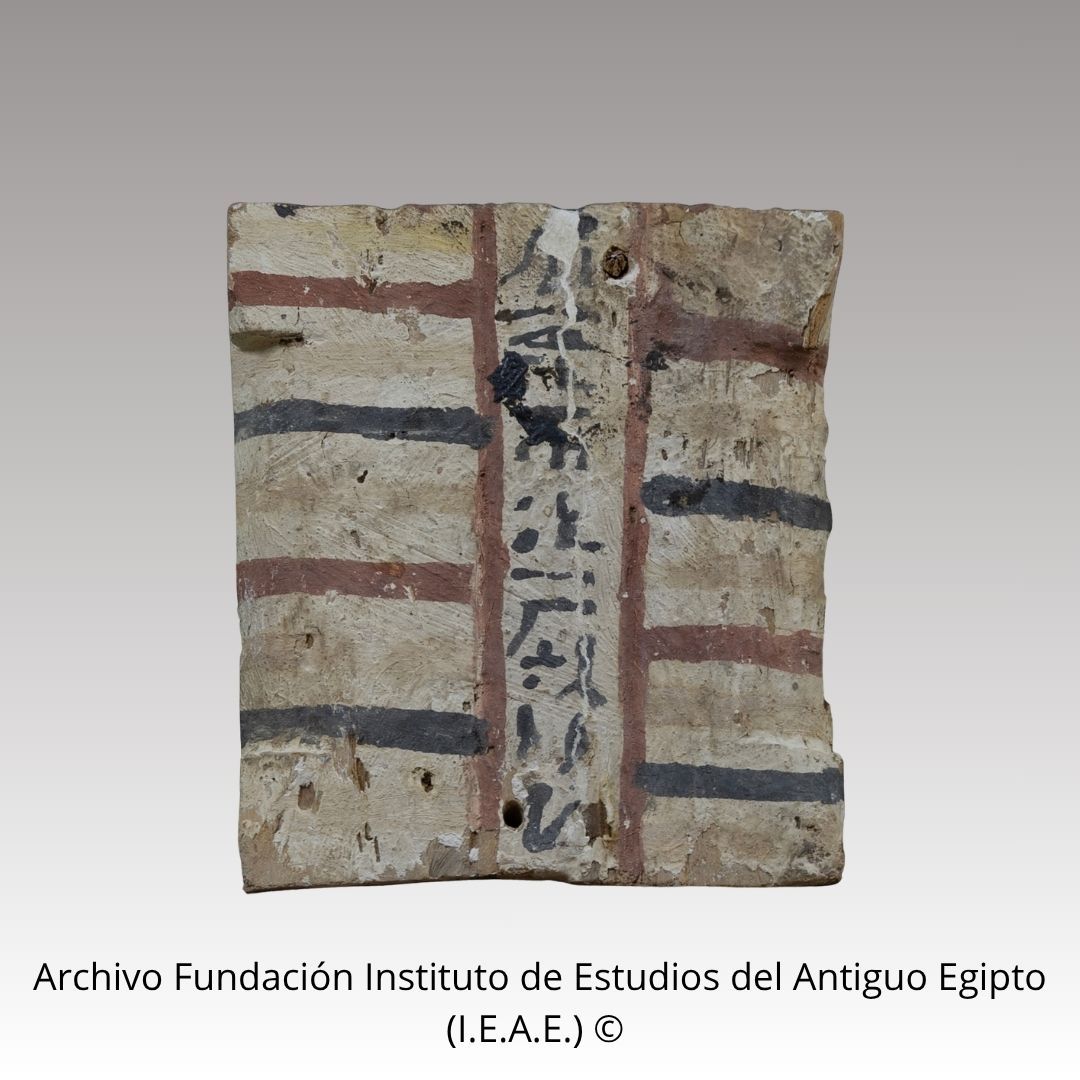
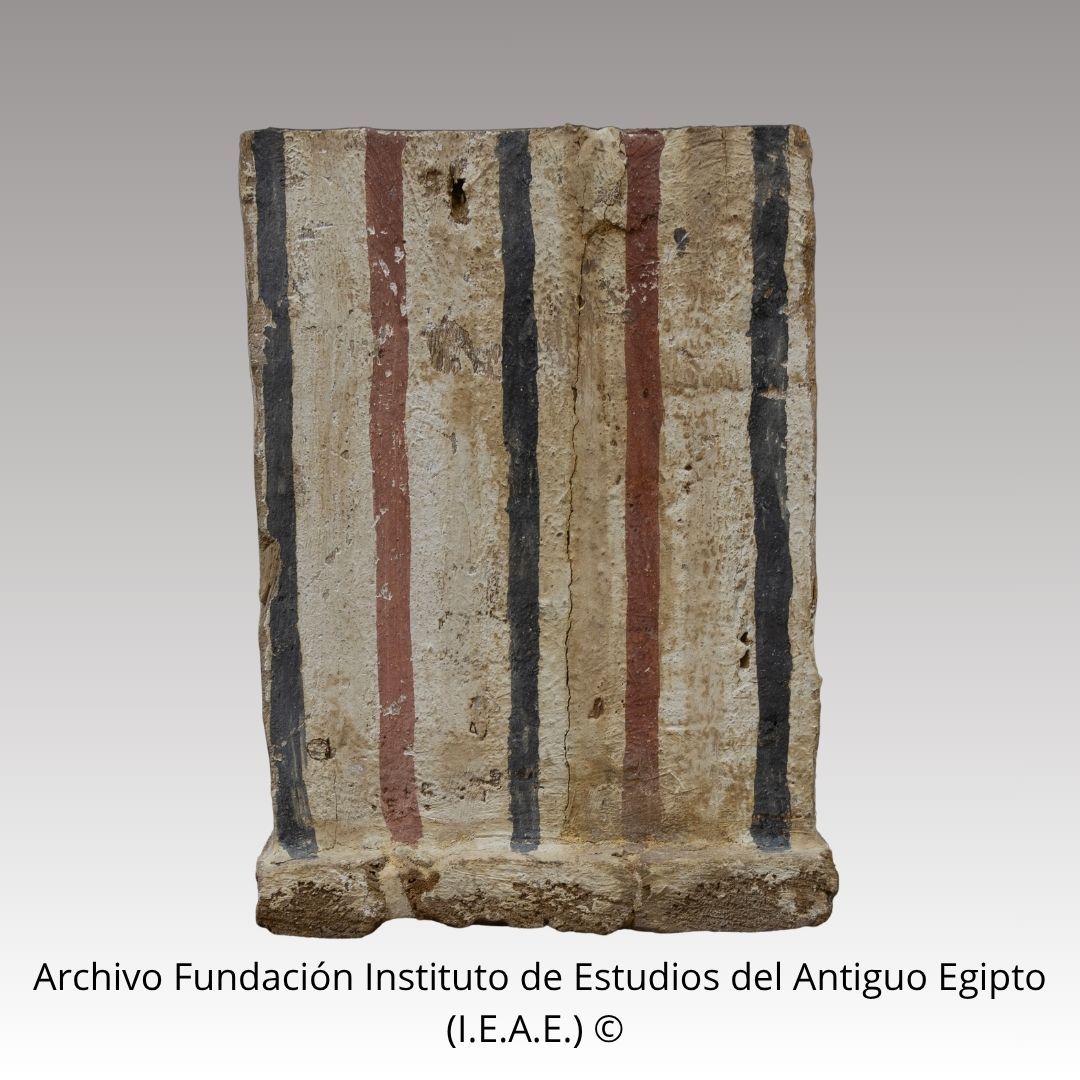
Se trata de una caja de madera, posiblemente acacia. Fue estucada en blanco para tapar los poros de la madera y sobre esta capa, se dió el color y la decoración definitiva. Dicha decoración consistió en líneas longitudinales azul-verdosas oscuras intercaladas con una línea de igual grosor en rojo.
La utilización de estos colores, no fue casual sino que albergaba una clara connotación sagrada, mágica y religiosa, tal como comenta la egiptóloga Rosalie David :
«El color se consideraba como un elemento básico de todas las representaciones artísticas, incluidos los murales, las estatuas, los bienes funerarios y la joyería, y se creía que las cualidades mágicas de cada color se convertían en una parte íntegra de cualquier objeto al que se añadía» (David, R, 2007)
Por lo tanto, también, tenemos que analizar esta caja de ushebtis como un fuerte amuleto protector para su dueña.
Así tenemos que el Blanco (Hedj y Shesep) se obtenía del yeso. A menudo se usaba para mezclarlo con otros tonos y así aclarar. Simbolizaba la pureza, lo sagrado, la limpieza y la luminosidad. El blanco era el color del vestido egipcio y por tanto se asociaba con la vida cotidiana, pero a menudo se usaba en obras artísticas para simbolizar también la naturaleza trascendental de la vida. Los sacerdotes siempre vestían de blanco; en las tumbas vemos como el difunto y sus familiares, visten de este color; en los festivales a los diferentes dioses…, por lo tanto, el blanco, era un color significativo, que representa la pureza y lo sagrado.
El Rojo Rojo (Desher): hecho con óxido de hierro y ocre rojo, se usaba para crear los tonos de la piel y simbolizaba la vida además del mal y la destrucción. El rojo estaba asociado con el fuego y la sangre, así que simbolizaba la vitalidad y la energía. También estaba asociado a la diosa Isis, por eso las mujeres en general llevaba anudado a sus vestidos, un cinturón de color rojo.
Por su parte el Verde (Uady) que se obtenía de la malaquita, un mineral de cobre, y simbolizaba la regeneración y resurrección a la vida, en el Más Allá, llamado también como el Campo de Juncos y que, siempre se asociaba con el color verde.
Dicho color, es el color de Osiris, el dios que muere y vuelve a la vida. En las primeras pinturas funerarias, el espíritu del difunto se representa en blanco, pero más adelante pasa a ser verde para relacionar la muerte con el Osiris eternamente resurgiendo y venciendo a la muerte. Siguiendo con el simbolismo de la resurrección, el verde también se usaba a menudo para representar a la diosa Hat-Hor la Señora del Sicomoro.
Negro (Kem): se hacía con carbón molido mezclado con agua y a veces con huesos quemados de animales. Simboliza la muerte, la oscuridad y el inframundo, pero también la vida, el nacimiento y la resurrección.
Kem, es también la raíz de la palabra Kmt : Negra que era como denominaban en la antigüedad a Egipto. Posiblemente debido al limo negro y fértil que dejaba el rio Nilo cada año después de la inundación y que hacía de este país un paraíso fértil, donde nunca faltaba el alimento.
Por este motivo, el color negro también simbolizó a Osiris, como regenerador de la vida, por lo que nunca tuvo una connotación negativa.
En cuanto a la tapa, también mantiene la misma decoración de líneas.
Estuvo cerrada mediante dos clavos de madera.
En la parte central, en negro, está dibujado el nombre de la dueña así como su cargo.
La Señora de la Casa, Aset-Nesy-Hetepy.
La mencionada caja, no presenta separación para los ushebtis por lo que debemos entender que simplemente se apilaron en el interior de la caja.
This is a wooden box, possibly made of acacia wood. It was stuccoed in white to seal the wood’s pores, and the final color and decoration were applied over this layer. The decoration consisted of dark blue-green longitudinal lines interspersed with a red line of equal thickness.
The use of these colors was not accidental but rather held a clear sacred, magical, and religious connotation, as Egyptologist Rosalie David explains:
«Color was considered a basic element of all artistic representations, including murals, statues, funerary goods, and jewelry, and it was believed that the magical qualities of each color became an integral part of any object to which it was added» (David, R, 2007).
Therefore, we must also analyze this ushabti box as a powerful protective amulet for its owner.
Thus, white (Hedj and Shesep) was obtained from gypsum. It was often used to mix with other shades to lighten them. It symbolized purity, the sacred, cleanliness, and luminosity. White was the color of Egyptian clothing and was therefore associated with daily life, but it was often used in works of art to also symbolize the transcendental nature of life. Priests always wore white; in tombs, we see the deceased and their families dressed in this color; in festivals dedicated to different gods… therefore, white was a significant color, representing purity and the sacred.
Red (Desher): made with iron oxide and red ochre, it was used to create skin tones and symbolized life as well as evil and destruction. Red was associated with fire and blood, so it symbolized vitality and energy. It was also associated with the goddess Isis, which is why women generally wore a red belt tied to their dresses.
Green (Wady), obtained from malachite, a copper mineral, symbolized regeneration and resurrection to life in the Afterlife, also called the Field of Reeds, which was always associated with the color green.
This color is the color of Osiris, the god who dies and returns to life. In early funerary paintings, the spirit of the deceased is represented in white, but later it becomes green to link death with Osiris eternally rising again and conquering death. Continuing with the symbolism of resurrection, green was also often used to represent the goddess Hathor, the Lady of the Sycamore.
Black (Kem): was made with ground charcoal mixed with water and sometimes with burnt animal bones. It symbolizes death, darkness, and the underworld, but also life, birth, and resurrection.
Kem is also the root of the word Kmt: Black, which was the ancient name for Egypt. This was possibly due to the black, fertile silt left by the Nile River each year after the flood, making the country a fertile paradise where food was never lacking.
For this reason, the color black also symbolized Osiris, as the regenerator of life, and therefore never had a negative connotation.
As for the lid, it also maintains the same line decoration.
It was closed with two wooden nails.
In the center, in black, is drawn the owner’s name and title.
The Lady of the House, Aset-Nesy-Hetepy.
The aforementioned box does not have a separation for the ushabtis, so we must understand that they were simply stacked inside the box.
Ficha técnica / Overview:
Campaña / Season: 2022 y 2023.
Periodo: / Period:Tercer Periodo Intermedio 1069-664a.C. / Third Intermediate Period 1069-664 b.C.
Cronología / Chronology: XXI Dinastía 1069 – 664 a.C./ XXI Dynasty 1069 – 664 b.C.
Procedencia / Origin: Luxor. Tumba del Visir Amen-Hotep Huy AT-28- B/C. Asasif. Luxor West Bank.
Actualidad / Present : Luxor Museum.
Materia/ Materials: Madera, estucada y pintada. / Wood, stuccoed and painted.
Dimensiones / Dimensions:33 cm. x 28,5 cm. x 24,6 cm.
Nº Registro: AT-28- B/C 352-22 y 371-23.
Bibliografía / Bibliography:
- Bedman, T.: La belleza y la higiene en el Antiguo Egipto”, Madrid, 1999.
- Bedman, T.: Color y belleza en el Antiguo Egipto. Madrid 1999.
- Bedman, T. Martín-Valentín, F y El Menshawy, A. (Eds.): Los Tesoros del Visir Amen-Hotep Huy. Catálogo de la Exposición, El Cairo, 2021.
- David, R.: Handbook to Life in Ancient Egypt. Londres, 2007.
- Mario Mendez, V.:
- Shaw, I.: Historia del Antiguo Egipto. Madrid, 2007, págs. 626-627.
- Wilkinson, R.H.: Symbol & Magic in Egyptian Art. Thames & Hudson, 1999.
- Wilkindon, T.: The Rise and Fall of Ancient Egypt. Random House Trade Paperbacks, 2013.
Por: Teresa Bedman, Mario Calvo, María Galvín, y Florencia Nicolari.