
Concubina funeraria de terracota -Terracotta funerary concubine.
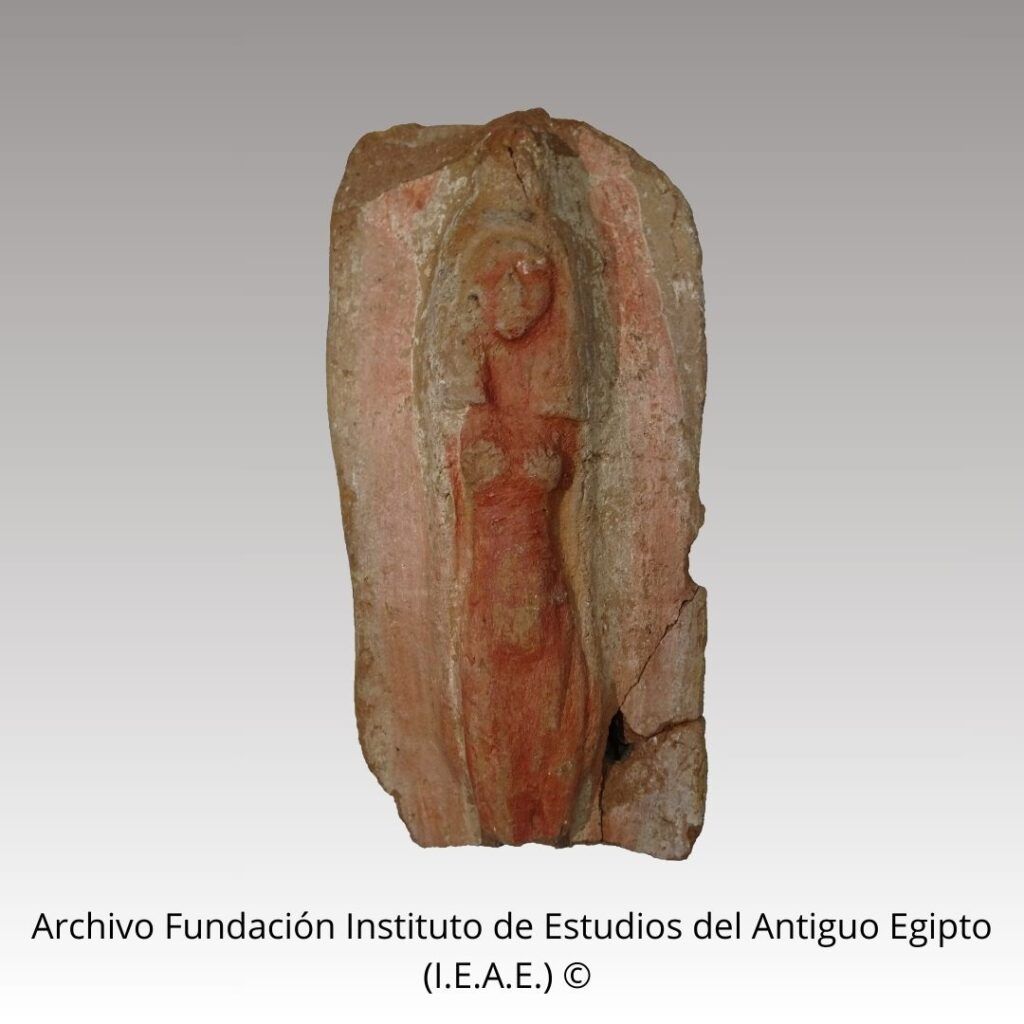
664-332 a.C / 664-332 b.C.
Egipto / Egypt
Este objeto ejemplifica un grupo de estatuillas del antiguo Egipto, hechas de arcilla cocida, fayenza, marfil y con menos frecuencia, de piedra caliza, cada una representando una figura femenina recostada en una cama o diván, sola o a menudo acompañada de una pequeña figura infantil, a veces rodeada por imágenes de vasijas o utensilios cosméticos. Este tipo parece haberse introducido en el Imperio Nuevo, a finales de la Dinastía XVIII, y continuó utilizándose hasta el Período Tardío. Su temática general y las características formales que las definen las relacionan con las figurillas votivas del Período Tardío y del período helenístico, hechas de arcilla cocida o, más típicamente, de piedra caliza, que representan una figura femenina de pie, con o sin un niño, dentro de una capilla o santuario.
Algunas de estas figurillas pintadas de rojo, un color vinculado. la magia, la enfermedad y el mal. Es posible que se usarán para curar enfermedades junto con tratamientos herbales. Se cantaban e invocaban conjuros sobre la figurilla para transferirle la enfermedad del paciente. Posteriormente, la figurilla se rompía para evitar que la enfermedad se propagara y volvió a infectar al paciente.
Hay otras teorías, más predominantes, que tienden a etiquetar estos objetos como figurillas de fertilidad que podrían haber sido depositadas como ofrendas votivas en santuarios domésticos y templos de las diosas Hathor, Mut o Anuket para promover una concepción exitosa y otorgar bendiciones divinas en la precaria etapa de la primera infancia. Dado que esta nuestra en cuestión, ha sido depositada en un contexto funerario, podemos pensar que, esta estatuillas servían para ofrecer servicios de carácter sexual en el más allá al difunto o para protegerle de toda enfermedad en el Mas Allá. Debido a su gran popularidad, se fabricaron en grandes cantidades en asentamientos y talleres de cerámica pertenecientes a templos y centros de culto.
This object exemplifies a group of ancient Egyptian figurines, made of fired clay, faience, ivory, and, less frequently, limestone, each depicting a reclining female figure on a bed or couch, alone or often accompanied by a small child figure, sometimes surrounded by images of vessels or cosmetic utensils. This type appears to have been introduced in the New Kingdom, at the end of the 18th Dynasty, and continued to be used until the Late Period. Its general theme and defining formal characteristics relate it to Late Period and Hellenistic votive figurines, made of fired clay or, more typically, limestone, depicting a standing female figure, with or without a child, within a chapel or sanctuary.
Some of these figurines were painted red, a color linked to magic, illness, and evil. They may have been used to cure illnesses along with herbal treatments. Chants and spells were invoked over the figurine to transfer the patient’s illness to it. The figurine was subsequently broken to prevent the disease from spreading and re-infecting the patient.
Other, more prevalent theories tend to label these objects as fertility figurines that may have been placed as votive offerings in domestic shrines and temples of the goddesses Hathor, Mut, or Anuket to promote successful conception and bestow divine blessings during the precarious stage of early childhood. Given that this figurine was placed in a funerary context, we can assume that these figurines were used to offer sexual services to the deceased in the afterlife or to protect them from all illness in the afterlife. Due to their great popularity, they were manufactured in large quantities in settlements and pottery workshops belonging to temples and cult centers.
Detalles de la pieza / Artwork Details:
Cerámica policromada. La figura representa una concubina acostada en decúbito supino sobre un lecho, como particularidad destacan las policromías, la peluca y cono sobre la cabeza. Esta estatuilla en particular representa a una mujer reclinada en una cama, acostada en decúbito supino sobre un lecho, Presenta restos de policromía en tonos rojizos, así como como peluca y cono sobre la cabeza. La figura es esbeltas y está desnuda. Su brazos alargados estan pegados al cuerpo. En todos los aspectos, esta pieza ilustra una artesanía bastante detallista aunque parece que se realizdó sobre un molde abierto de una sola pieza, por lo que los extremos y los lados son redondeados, y la parte posterior es ligeramente convexa. Tras el moldeado y la cocción, la estatuilla se cubrió primero con un baño blanco y luego con un característico lavado rojo, que se ha conservado especialmente en los cuerpos. Los largos rizos de la peluca aún conservan restos de la pintura negra original.
Polychrome ceramic. The figurine represents a concubine lying supine on a bed. Particularly noteworthy are the polychromes, the wig, and the cone on her head. This particular figurine represents a woman reclining on a bed, lying supine on a bed. It presents traces of polychrome in reddish tones, as well as a wig and cone on her head. The figure is slender and nude. Her elongated arms are close to her body. In all respects, this piece illustrates quite detailed craftsmanship, although it appears to have been made from a single-piece open mold; therefore, the ends and sides are rounded, and the back is slightly convex. After molding and firing, the figurine was first covered with a white bath and then with a characteristic red wash, which has been preserved especially on the bodies. The long curls of the wig still retain traces of the original black paint.
Ficha técnica / Overview:
Campaña / Season: 2016.
Título / Title: Concubina funeraria / Funeral concubine.
Periodo / Period: Periodo Ramésida 1295-1069 a.C. / Ramesside Period 1295-1069 b.C.
Cronología / Cronology XIX Dinastía 1295 a.C.-Ramsés XI 1069 a.C. / XIX Dynasty 1295 a.C.- Rameses XI 1069 b.C.
Procedencia / Origin: Lúxor. Tumba del Visir Amen-Hotep Huy AT-28-. Asasif. Luxor West Bank.
Actualidad: Luxor Museum.
Materia/ Materials : Cerámico pintado / Policrome pottery.
Dimensiones: 12,62 cm. x 6,68 cm. x 3,9 cm.
Nº Registro: 10281-16.
Paralelos / Parallels:
- Brithis Museum, nº inv. 15099.
- Museum of Fine Arts de Budapest, Nº Inv. 98-2.E
- Petrie Museum, nº inv. UC 24515.
Bibliografía / Bibliography:
- Bedman, T. Martín-Valentín, F y El Menshawy, A. (Eds.): Los Tesoros del Visir Amen-Hotep Huy. Catálogo de la Exposición, El Cairo, 2021.
- Martín Valentín, F. y Bedman, T (Ed.): Proyecto Visir Amen-Hotep Huy (Tumba AT-28-).Memoria preliminar 2009-2016. Misión Arqueológica española en Asasif (Luxor-Occidental). Málaga, 2017.
- Shaw, I.: Historia del Antiguo Egipto. Madrid, 2007, págs. 626-627.
POR: Teresa Bedman, Mario Calvo, María Galvín, y Florencia Nicolari.