
Conjunto de Ushebtis - Ushebties set
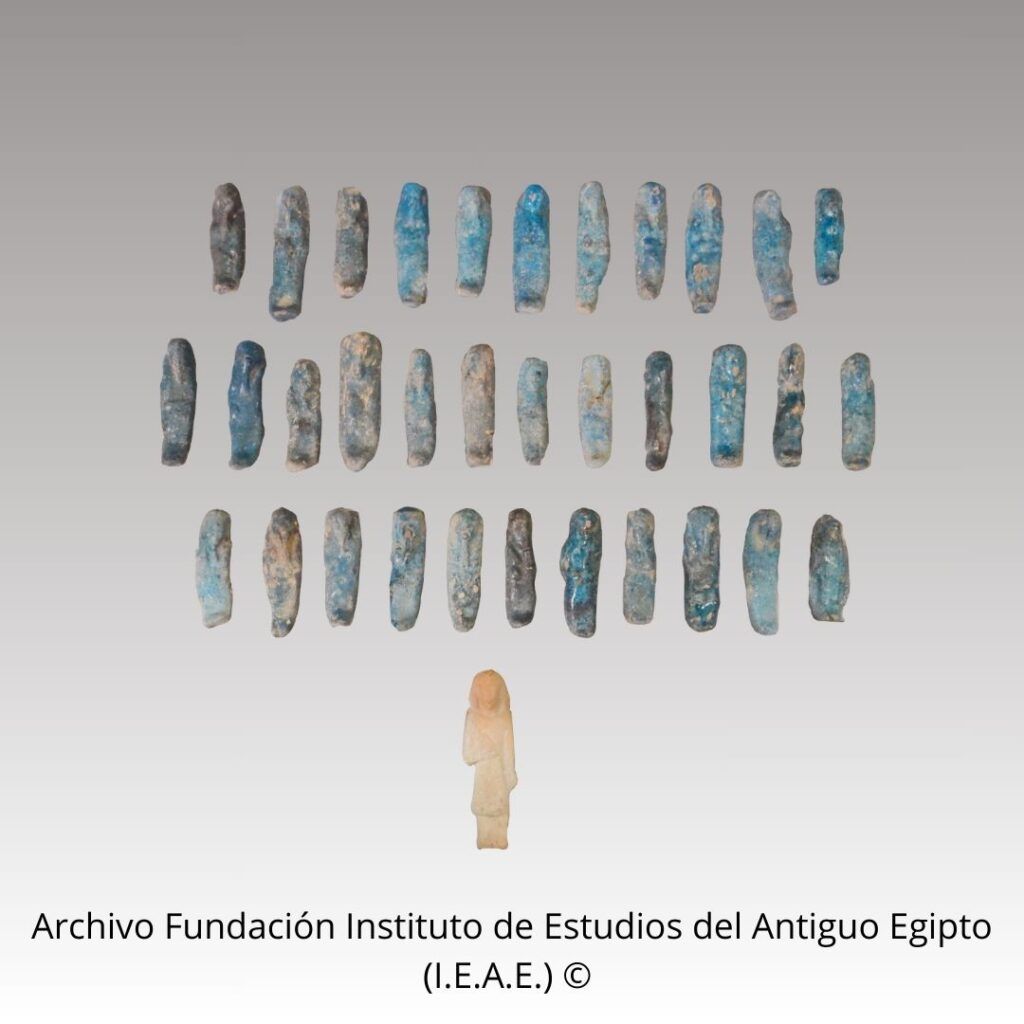
1069-664 a.C / 1069-664 b.C.
Egipto / Egypt
Los ushebtys gozaron de gran popularidad entre los elementos a incluir en el ajuar funerario del Antiguo Egipto. De material y amaño variable, respondían por el fallecido en la otra vida del Más Allá desempeñando las tareas designadas.
Ushebtys were very popular among the elements to be included in the funerary trousseau of Ancient Egypt. Of variable material and size, they responded for the deceased in the afterlife of the Beyond by performing the designated tasks.
Detalles de la pieza / Artwork Details
Conjunto de 35 Ushebtis realizados en fayenza, localizados todos juntos.
Las figuras se presentan de pie, mirando hacia adelante, con las piernas juntas y los brazos apoyados sobre el pecho. No hay trazos de pintura.
Estas figurillas, aportarían aperos de labranzas sobre sus hombros. Este tipo de herramientas agrícolas eran características de los ushebtis trabajadores, incluidos como parte del ajuar funerario del difunto, para que le sirvieran en los trabajos en el Más Allá, sim embargo en estas figurillas, estas características son muy toscas y apenas se distinguen en alguna de ellas.
El conjunto, estaba capitaneado por un capataz, que se distingue porque lleva un brazo cruzado en el pecho y el otro recto, pegado junto a su cuerpo. Asi mismo lleva su faldellin recogido, característico de los capataces.
A group of 35 ushabtis made of faience, all found together.
The figures are depicted standing, facing forward, with their legs together and their arms resting on their chests. There are no traces of paint.
These figurines would have carried farming implements on their shoulders. This type of agricultural tool was characteristic of working ushabtis, included as part of the deceased’s funerary goods, to serve them in their work in the afterlife. However, in these figurines, these features are very crude and barely distinguishable on some of them.
The group was led by a foreman, who is distinguished by having one arm crossed on his chest and the other straight, close to his body. He also wears his kilt rolled up, characteristic of foremen.
Ficha técnica / Overview:
Campaña / Season: 2018.
Título / Title: Set de ushebtis / Ushebties set.
Periodo: Tercer Periodo Intermedio 1069-664a.C. Period: Third Intermediate Period 1069-664 b.C.
Cronología / Chronology: XXI Dinastía 1069 – 664 a.C./ XXI Dynasty 1069 – 664 b.C.
Procedencia / Origin: Lúxor. Tumba del Visir Amen-Hotep Huy AT-28- B/C. Asasif. Luxor West Bank.
Actualidad / Present : Luxor Museum.
Materia/ Materials Fayenza / Faience.
Dimensiones: varios tamaños
Nº Registro: AT-28-B/C-52-18.
Paralelos / Parallels
-
World Museum, nº inv. 56.21.49. Proviene de Helios Gallery. Anteriormente, perteneció al patrimonio de Christine Simons (1943-2025). West Midlands, Reino Unido; adquirida entre la década de 1980 y principios de la década de 2000 en Egipto.
Bibliografía / Bibliography:
- Bedman, T. Martín-Valentín, F y El Menshawy, A. (Eds.): Los Tesoros del Visir Amen-Hotep Huy. Catálogo de la Exposición, El Cairo, 2021.
- Martín Valentín, F. J. : Azules Egipcios. Pequeños tesoros del Arte: Los dioses y las cosmogonías. Barcelona, 2005 págs. 23-27.
- Martín Valentín, F. y Bedman, T (Ed.): Proyecto Visir Amen-Hotep Huy (Tumba AT-28-).Memoria preliminar 2009-2016. Misión Arqueológica española en Asasif (Luxor-Occidental). Málaga, 2017.
- Shaw, I.: Historia del Antiguo Egipto. Madrid, 2007, págs. 626-627.
Por: Teresa Bedman, Mario Calvo, Javier Chamorro, María Galvín, y Florencia Nicolari.