Tercer Periodo Intermedio 1069-664a.C. / Third Intermediate Period 1069-664 b.C.
Egipto/ Egypt
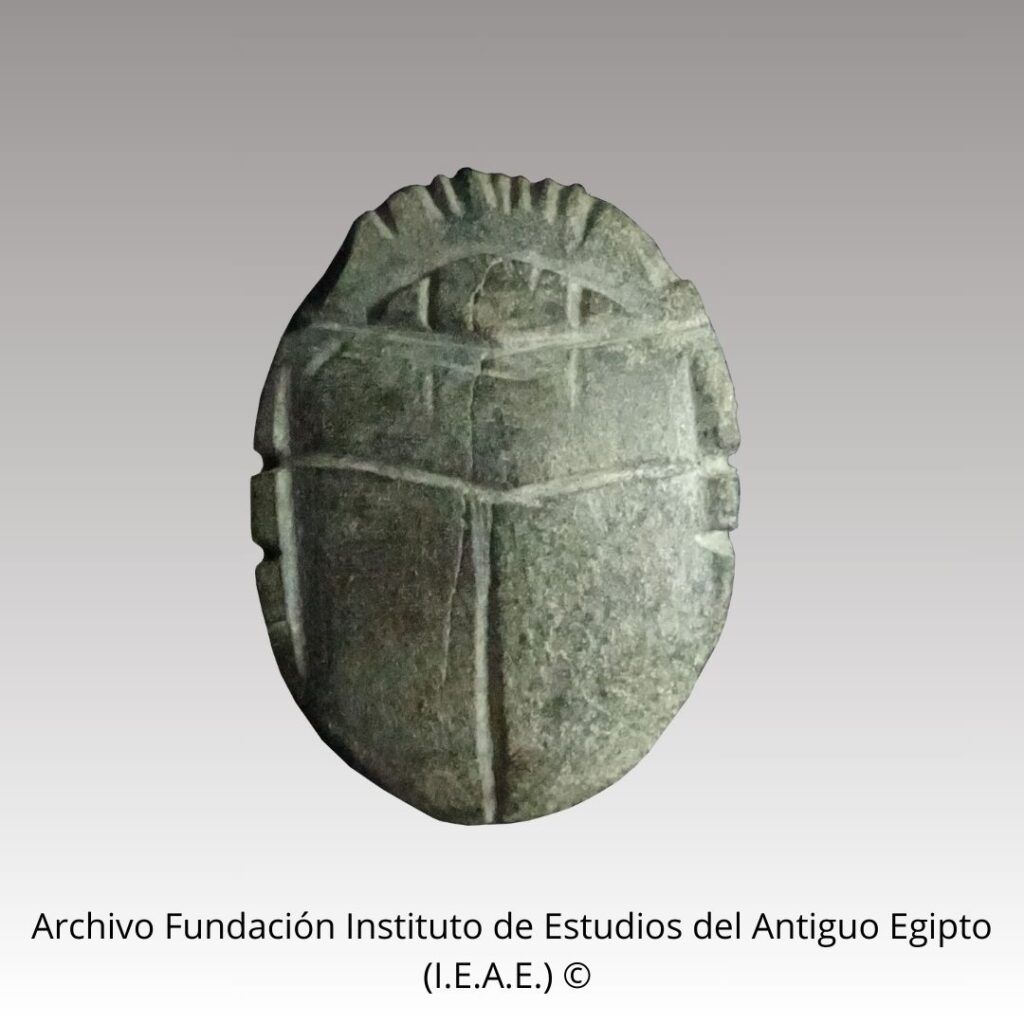
Jepri (jpr)  es una manifestación del sol en forma de escarabajo (Scarabaeus sacer). Su nombre significa «el que vino a la existencia por sí mismo». Es el dios asociado con el sol naciente en el amanecer, que renace cada día, simbolizando la renovación constante y eterna. Está estrechamente relacionado con el ciclo de la vida, la muerte y el renacimiento.
Jepri encarnaba la idea de transformación de cambio, tanto en el ciclo solar como en la vida humana. De ahi que este potente amuleto fuese utilizado tanto en el ritual funerario, como amuletos protector para el corazón, asegurando que este no testificara contra el difunto en el juicio de Osiris, asi como durante la vida, ya que era un fuerte símbolo protector.
A Jepri también se asocia con Atum, otro dios creador, y se le considera una forma de Atum en su aspecto solar.
Khepri (khepri) is a manifestation of the sun in the form of a scarab beetle (Scarabaeus sacer). His name means «the one who came into existence by himself.» He is the god associated with the rising sun at dawn, who is reborn every day, symbolizing constant and eternal renewal. He is closely associated with the cycle of life, death, and rebirth.
Khepri embodied the idea of transformation and change, both in the solar cycle and in human life. Hence, this powerful amulet was used both in funeral rituals and as a protective amulet for the heart, ensuring that it would not testify against the deceased at the judgment of Osiris, as well as during life, as it was a strong protective symbol. Khepri is also associated with Atum, another creator god, and is considered a form of Atum in his solar aspect.
Detalles de la pieza / Artwork Details:
Talla de escarabeo en esquisto verde.
Carved green schist scarab.