Estela Pa-ny-Amón – Stele Pa-ny-Amón


Imperio Nuevo de Egipto 1550-1069 a.C. / New Kingdom of Egypt 1550-1069 b.C.
Egipto / Egypt
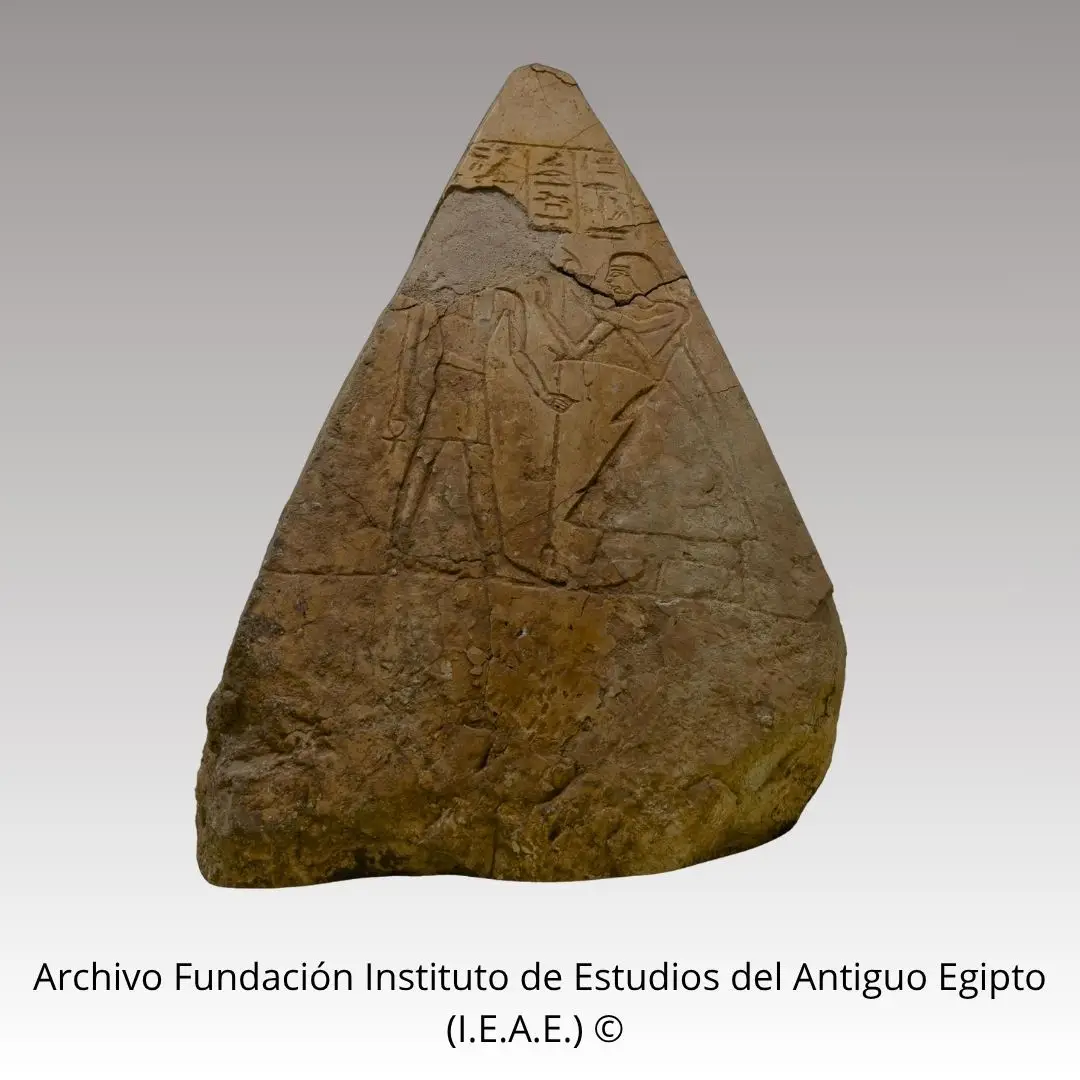
El pyramidion es un elemento arquitectónico pétreo que corona pirámides u obeliscos, en ocasiones recubierto de materiales preciosos (oro, plata o electro) y representa al ben o benben, fetiche del dios primitivo Atum. Se asocia con el culto al Sol, por tan
to, son habituales en éstos las representaciones de deidades sola-res (Ra-Horajty, Ra, Atum o Jepri). Normalmente, se encontraba en la cima de las pirámides funerarias de muchas tumbas privadas desde principios de la Dinastía XIX. Asimismo, se pudo encontrar una representación del fénix, la cual se relaciona con Osiris, dios de los muertos.
Se supone que el uso de pyramidions que se construyeron en capillas privadas en este período, tenían la función de emular el significado religioso y funerario de las pirámides durante el Imperio Antiguo, como lugar de enterramiento de los reyes.
A partir de la Dinastía XVIII aparecen en estructuras funerarias de individuos. Los materiales de construcción varían desde arenisca (Dinastía XVIII) y piedra caliza (Período Ramésida), hasta piedra dura y loza. Las decoraciones figurativas y las inscripcio-nes tenían una forma claramente solar. Sin embargo, ocasionalmente también aparecen dioses del inframundo (Mendez, 2024, 235).
The pyramidion is a stone architectural element that crowns pyramids or obelisks, sometimes covered in precious materials (gold, silver, or electrum), and represents the ben or benben, a fetish of the primordial god Atum. It is associated with sun worship; therefore, representations of solar deities (Ra-Horakhty, Ra, Atum, or Khepri) are common on these structures. It was typically found atop the funerary pyramids of many private tombs from the beginning of the 19th Dynasty. A representation of the phoenix, associated with Osiris, god of the dead, was also found. It is believed that the pyramidions built in private chapels during this period served to emulate the religious and funerary significance of the pyramids during the Old Kingdom, as burial sites for kings. From the 18th Dynasty onward, they appear in funerary structures for individuals. Construction materials vary from sandstone (Ramesside Period), up to hard stone and faience. The figurative decorations and inscriptions had a clearly solar form. However, gods of the underworld also occasionally appear (Mendez, 2024)
Detalles de la pieza / Artwork Details:
El pyramidion fue descubierto fragmentado durante las campañas de excavación de los años 2015 y 2016, en la zona suroeste del patio en la cuadrículas G5 y 6 y en la F6 y 8 en diferentes alturas (Mendez, 224). Cerca de esta zona, existe una estructura de adobe asociada a un área cultual perteneciente a la tumba -86- (Sureste) donde se encontró el pyramidion.
el dueño se llamaba Ria y llevó el título de Jefe de los Almacenes de la Casa de Amon. (Mendez,2024).
The pyramidion was discovered in fragments during the 2015 and 2016 excavation campaigns in the southwest area of the courtyard, in grids G5 and 6 and F6 and 8, at different heights (Mendez, 224). Near this area, there is a mud-brick structure associated with a cultic area belonging to tomb 86 (Southeast), where the pyramidion was found. The owner was named Ria and held the title of Chief of the Storehouses of the House of Amun. (Mendez, 2024)
Ficha técnica / Overview:
Campaña / Season: 2015 y 2016.
Periodo / Period: Imperio Nuevo de Egipto 1550-1069 a.C. / New Kingdom of Egypt 1550-1069 b.C.
Cronología / Chronology:
Procedencia / Origin: Lúxor. Tumba del Visir Amen-Hotep Huy AT-28-. Patio Asasif. Luxor West Bank.
Actualidad / Present : Luxor Museum.
Materia/ Technique: Bajo relieve para las figuras e inciso pra los jeroglíficos./ Low relief for the figures and incised for the hieroglyphs.
Dimensiones / Dimensions: Base 30 x 36 cm. Alto 36 cm y Alto de la base 46 cm / Base 30 x 36 cm. Height 36 cm and Base height 46 cm
Nº Registro: 10110, 10147, 10287, 10297, 10361.
Bibliografía / Bibliography:
- Bedman, T. Martín-Valentín, F y El Menshawy, A. (Eds.): Los Tesoros del Visir Amen-Hotep Huy. Catálogo de la Exposición, El Cairo, 2021.
- Mendez Vazquez,M.: Un ejemplar de pyramidion en la AT-28- del Visir Amen-Hotep Huy en Asasif (Luxor). Trujillo (Cáceres), 2024. Boletín de la Real Academia de Extremadura de las Letras y las Artes. Trujillo (Cáceres), 2024, Tomo 32, pág 235-248.
- Shaw, I.: Historia del Antiguo Egipto. Madrid, 2007, págs. 626-627.
POR: Teresa Bedman, Mario Calvo, María Galvín, y Florencia Nicolari.