Sarcofágo del Sacerdote Uab Anj-ef-(en)-Jonsu. / - Coffin to the Priest Uab Anj-ef-(en)-Jonsu.
945 a.C.-715 d.C / 945 b.C.-715 a.C
ENTERRAMIENTO INTACTO / INTACT BURIAL
Egipto / Egypt
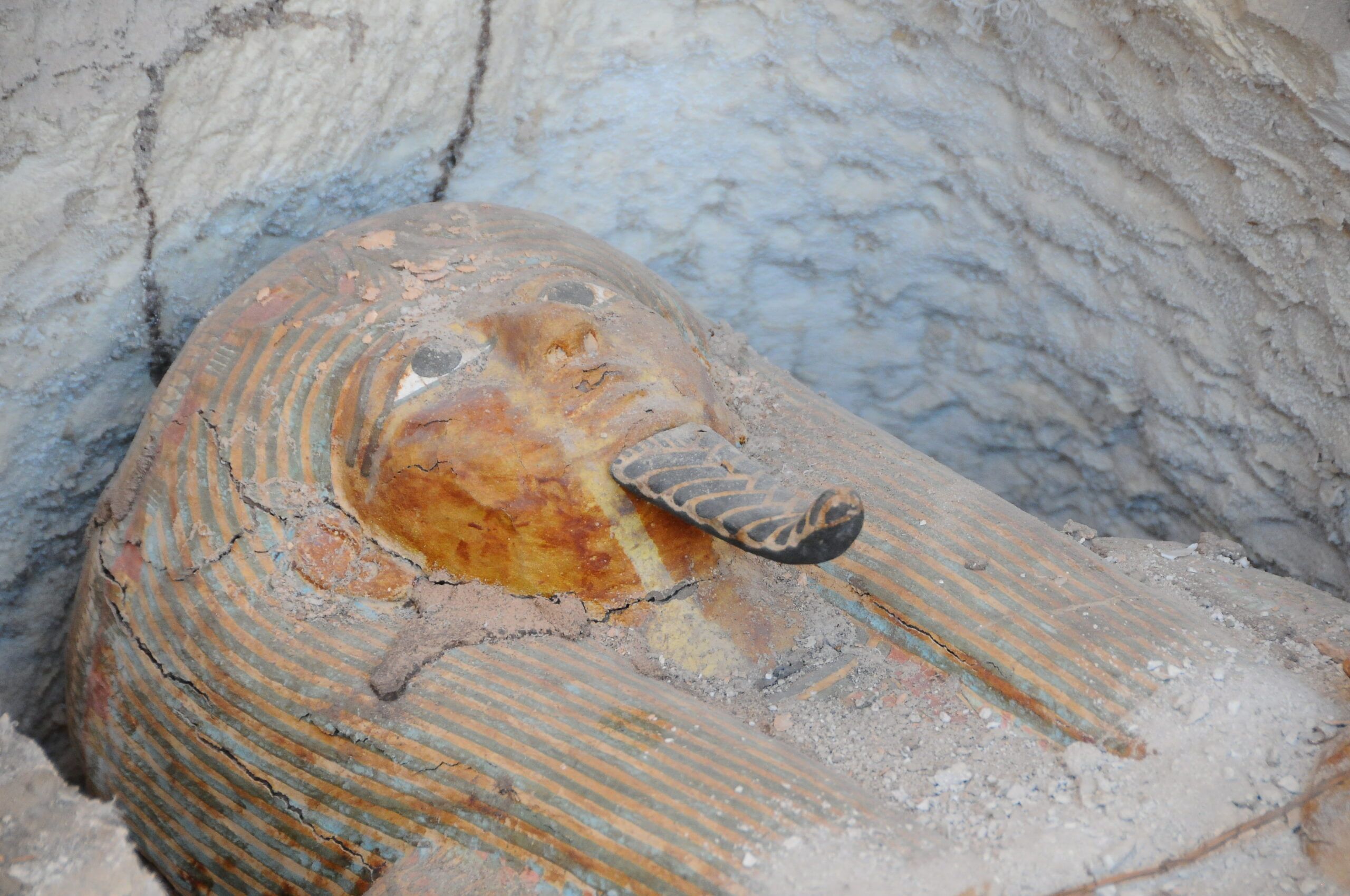
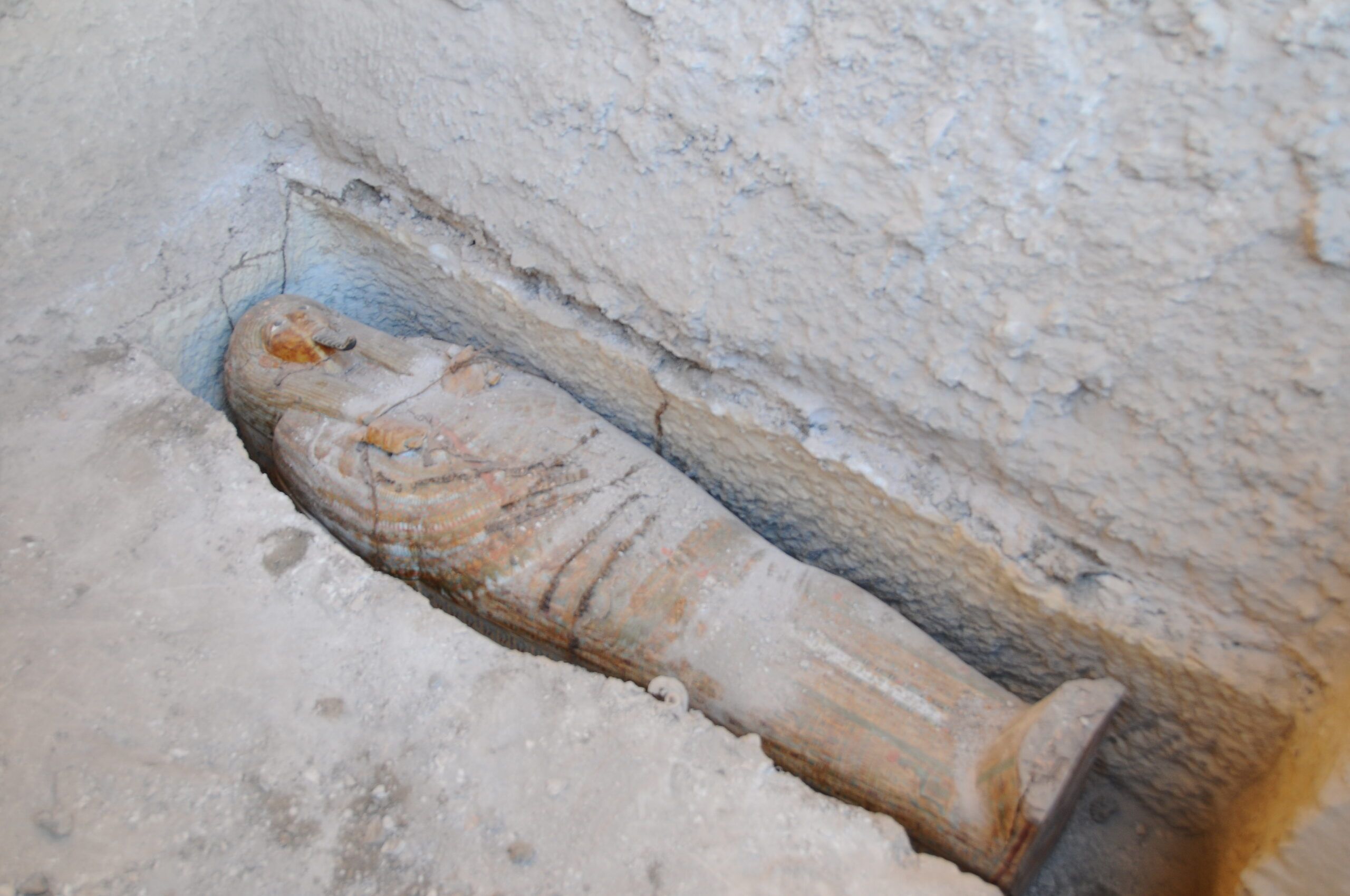
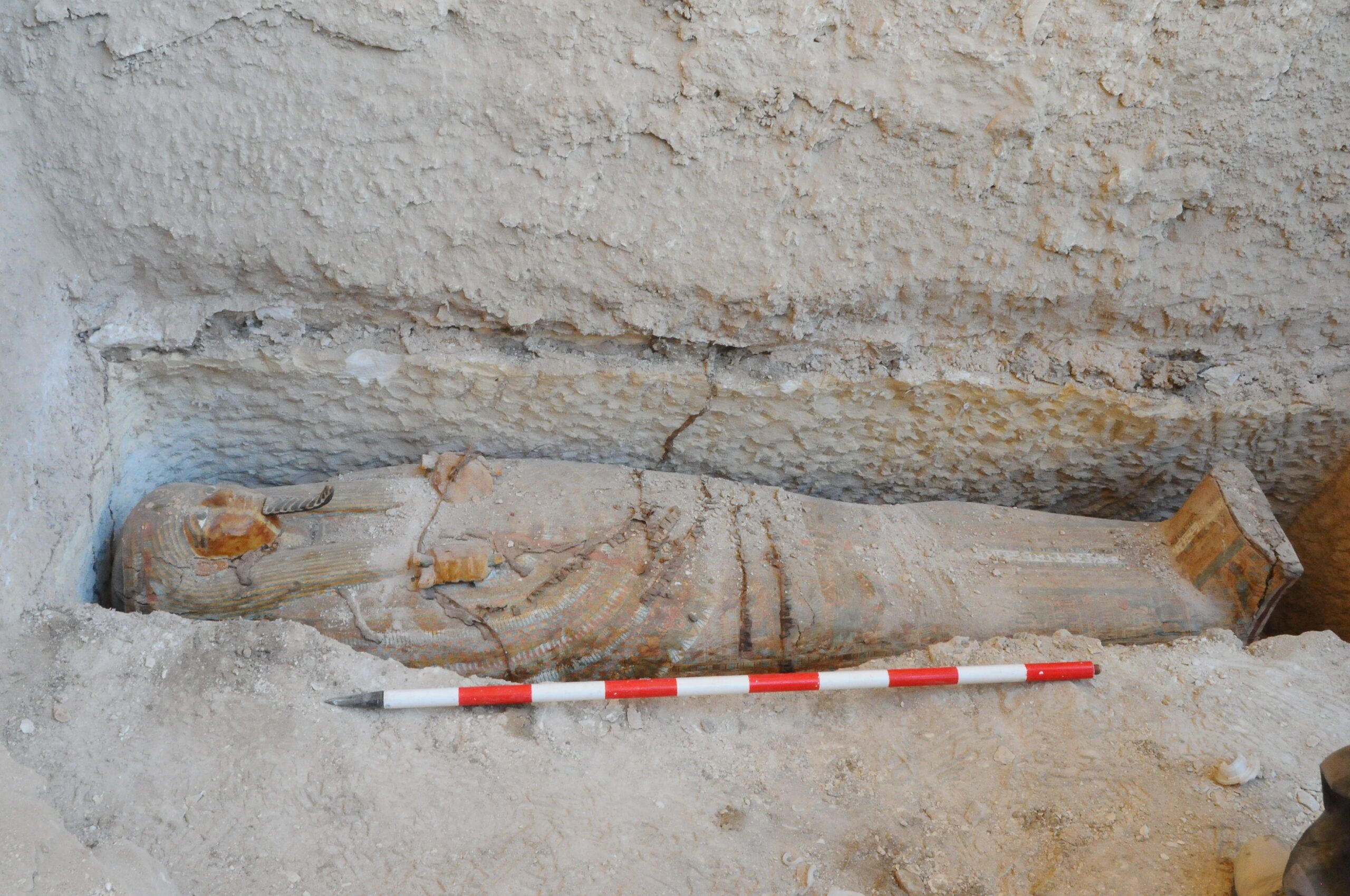
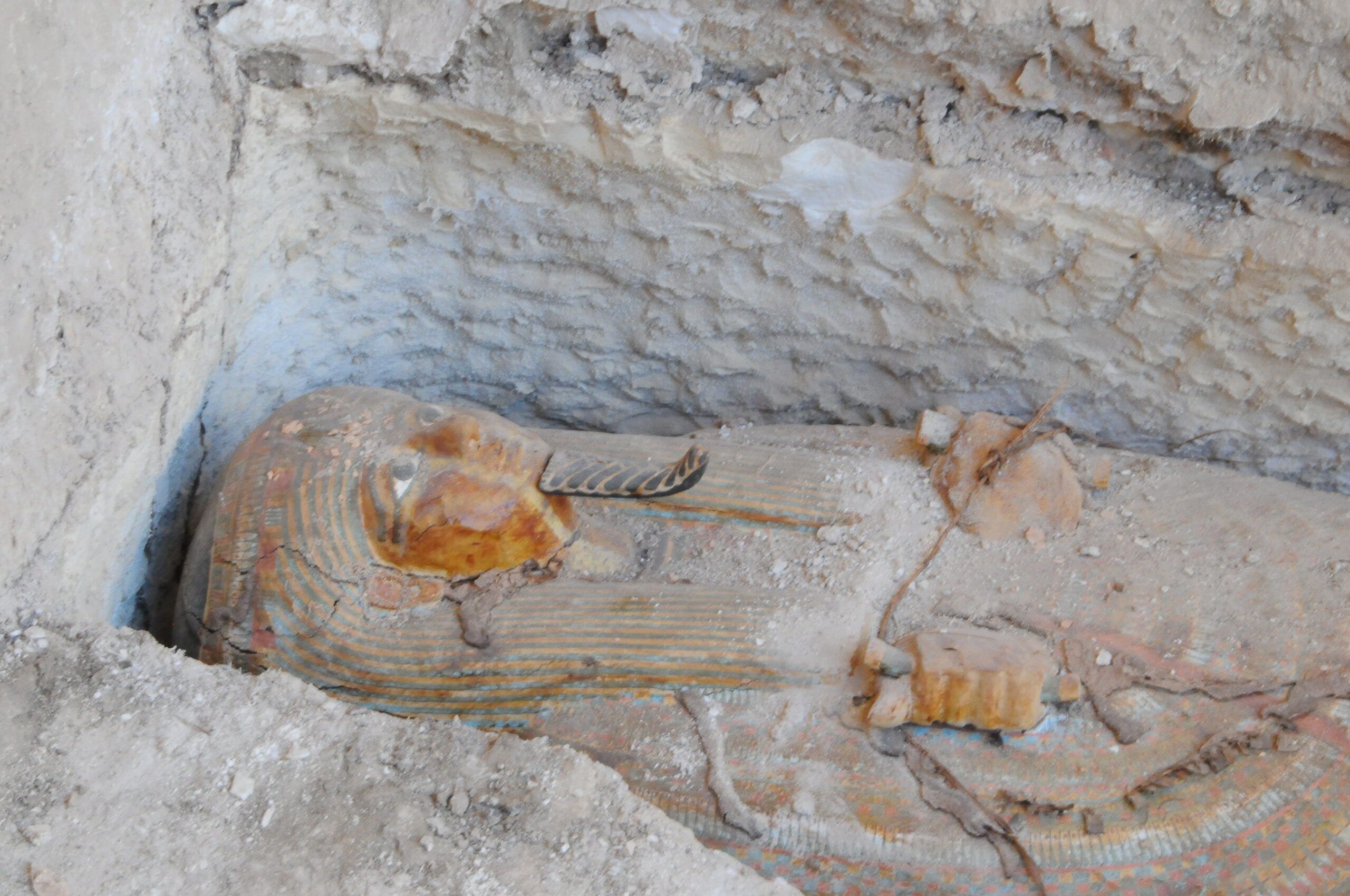
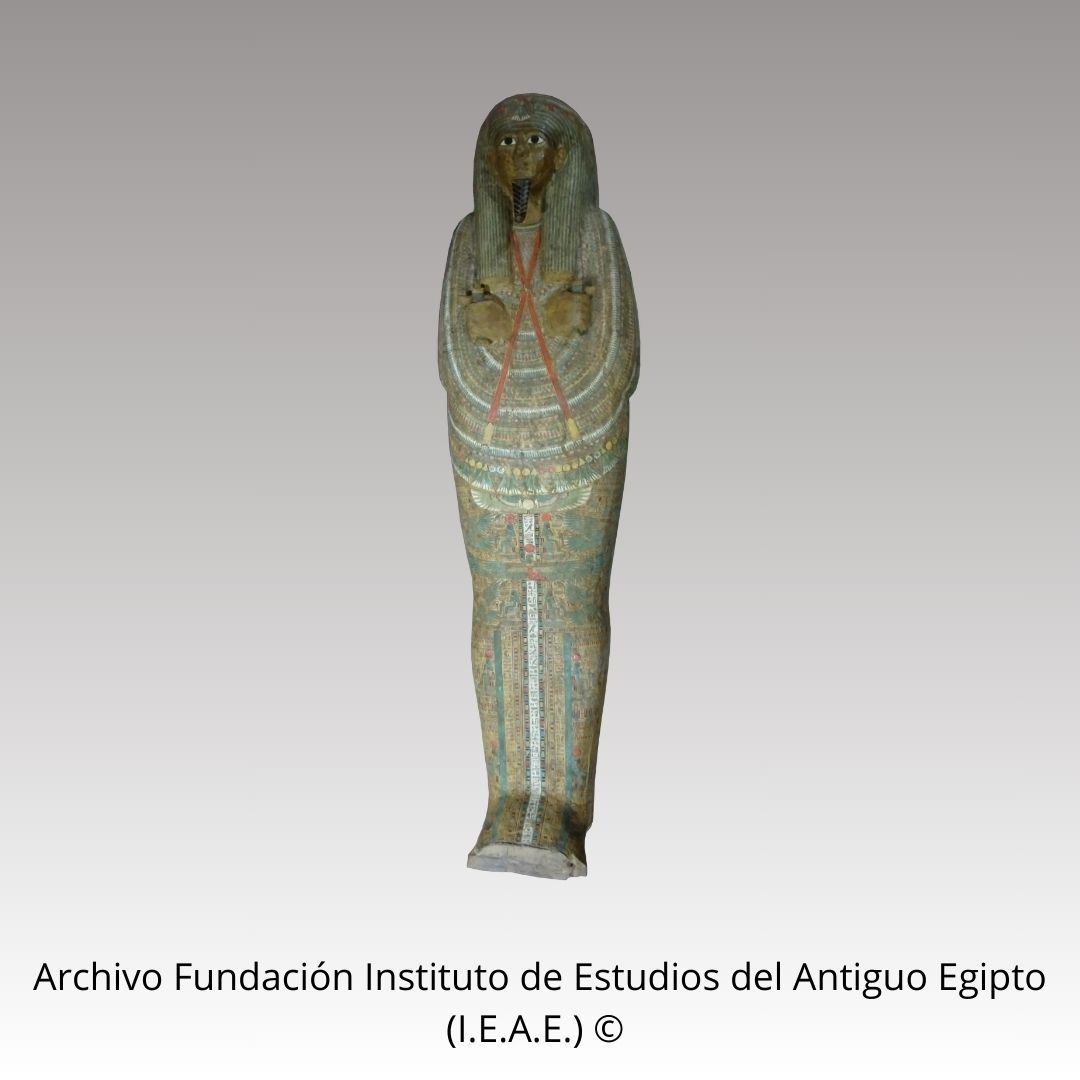
Sarcófago antropoide masculino con peluca tripartita con rayas y una corona floral perteneciente al Sacerdote Uab Anj-ef-(en)-Jonsu.
Anthropoid male coffin with stripes and florar crown, belonging to the Priest Uab of Anj-ef-(en)-Jonsu.
Detalles de la pieza / Artwork Details;
Se trata de un enterramiento intacto localizado en la zona sur, en el patio de la Tumba del Visir Amen-Hotep Huy, localizado el 13 de Noviembre del .2015 por el equipo de la Misión Arqueológica Española de la Fundación del Instituto de Estudios del Antiguo Egipto de Madrid. Directores Dr. Francisco Martín-Valentín y Teresa Bedman.
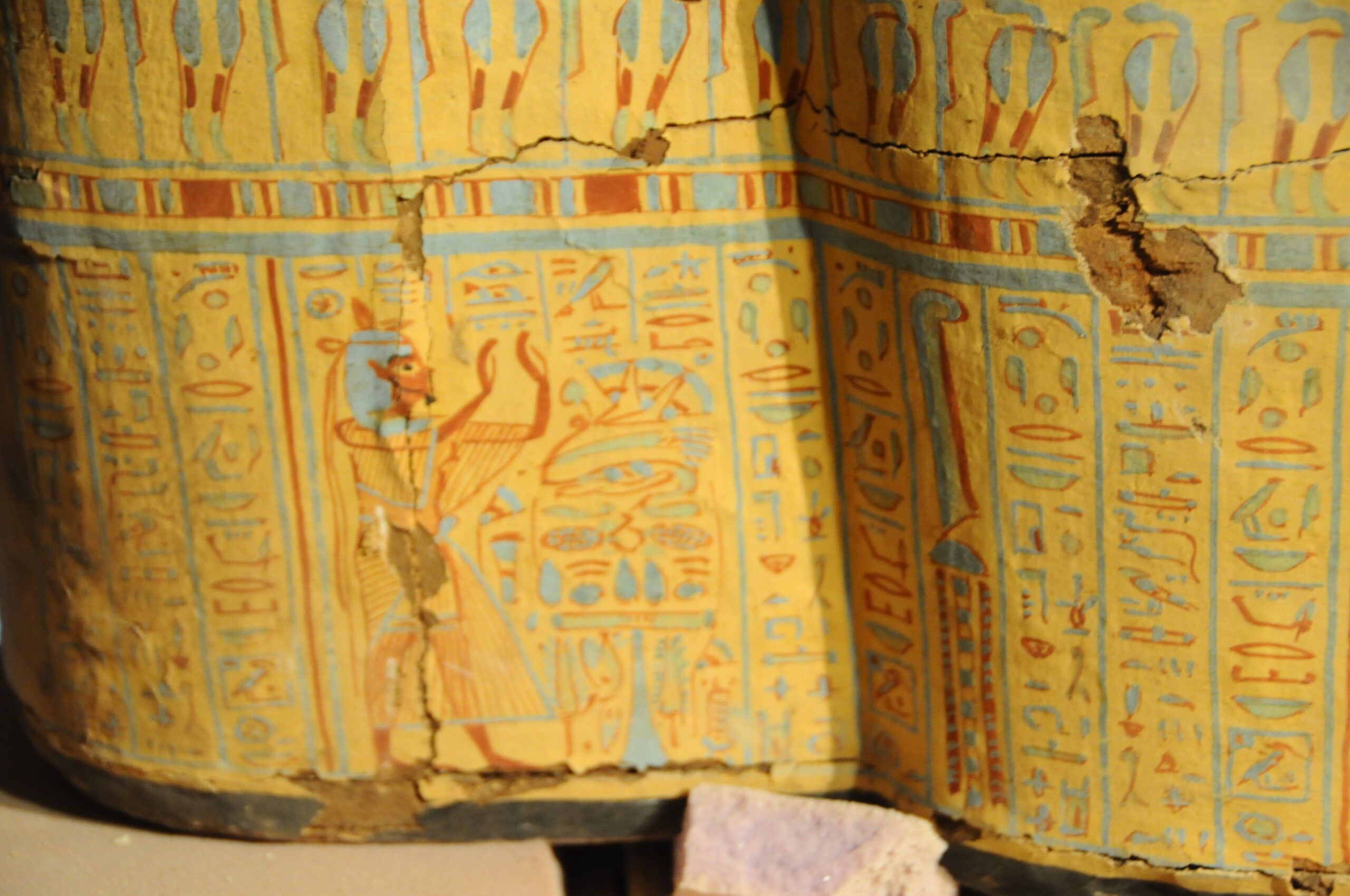
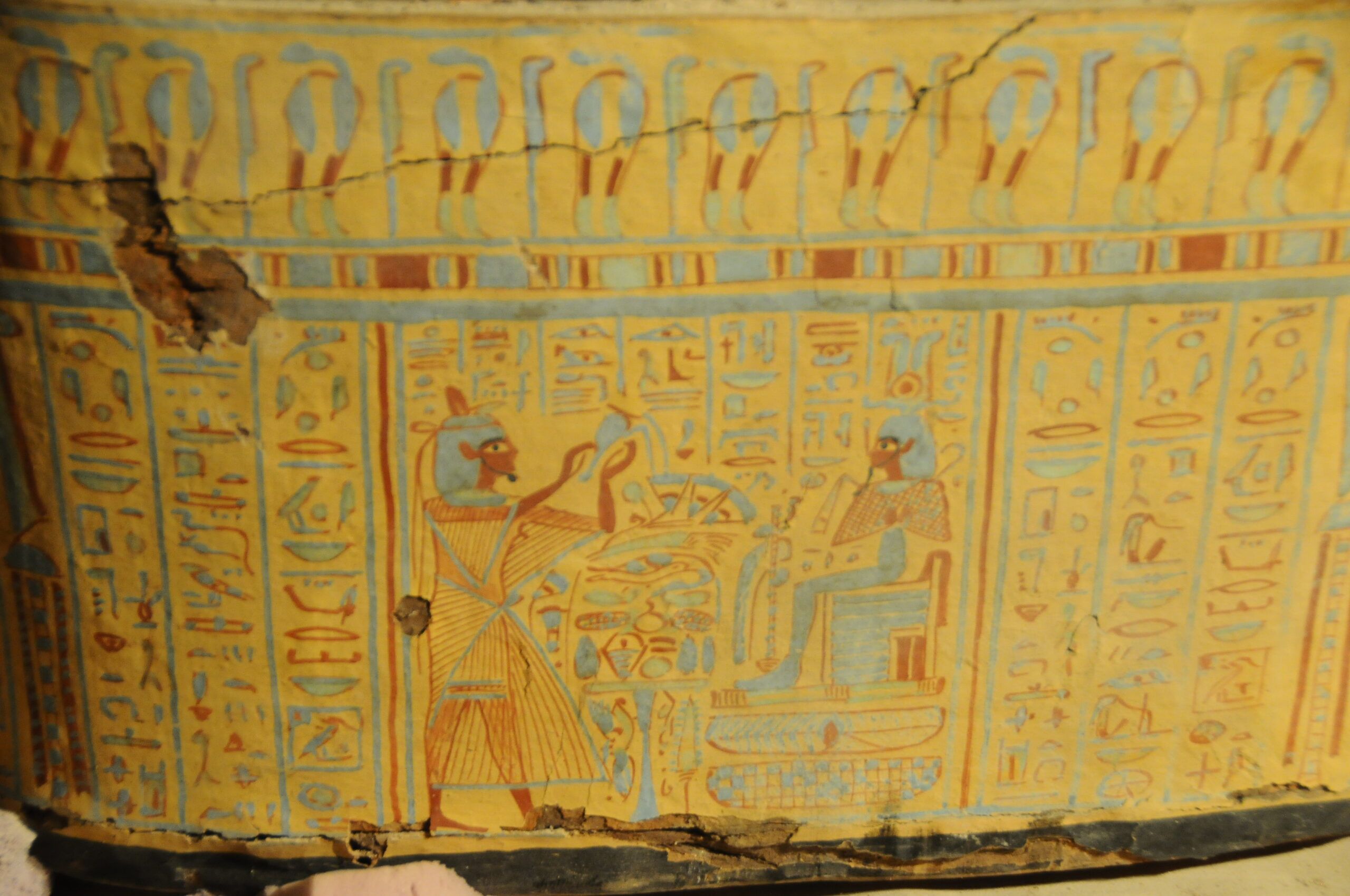
Sarcófago antropoide masculino, con peluca tripartita con rayas y una corona floral perteneciente al Sacerdote Uab Anj-ef-(en)-Jonsu. Tiene una barba trenzada y un ancho collar Usej protege su cuello y hombros. La envoltura de la momia muestra las dos manos cruzadas con dos tallos de papiros en ellas. Tres columnas de texto se distinguen en el centro que van desde debajo de los brazos hasta los pies. La caja del sarcófago, está decorada con varias representaciones del difunto haciendo ofrendas a los dioses Osiris, Nefertum, Anubis, a la diosa Hat-Hor bajo el aspecto de una vaca, y a la Señora del Occidente.
La momia, que se encontraba dentro de su sarcófdago, pertenece al sacerdote Uab, escriba de las ofrendas divinas en la casa de Amon-Ra, rey de los dioses, Anj-ef-(en)-Jonsu, conservaba un collar floral posiblemente de flores de aciano.
Las investigaciones sobre este personaje, hemos descubrimos que, Anj-ef-(en)-Jonsu había pertenecido a una ilustre familia. Su padre, llamado Anj-ef-(en)-Jonsu, (igual que él), descendía de un Segundo Profeta de Amón, llamado Ra-Ma, su título “Padre divino, amado del dios, el que abre las Puertas del Cielo en Ipet-Sut”, lo que quería decir que tuvo acceso directo al “santo de los santos” del templo y participó en el rito del culto divino diario para el dios en Karnak.
Su madre, llevó los títulos de Cantora de Amon-Re y Señora de la Casa, Dyed-Mut-Iu-es-Anj.
Era hija de Anjef-(en)-Jonsu I y descendía del Cuarto Profeta de Amón Najt-ef-Mut y tuvo al menos tres hijos:
- Pa-di-Iry-Jonsu (parte del enterramiento de est hermano y algunos de sus objetos tambien han sido localizado por la Mision Española dentro de la Tumba del Visir Amen-Hotep Huy. Ver tambien en este Museo Virtual)
- Anj-ef-(en)-Jonsu.
- Hory.
El sarcófago de Dyed-Mut-Iu-es-Anj, actualmente se encuentra en los Museos Vaticanos.
This is an intact burial located in the southern area, in the courtyard of the Tomb of Vizier Amenhotep Huy, discovered on November 13, 2015, by the team of the Spanish Archaeological Mission of the Foundation of the Institute of Ancient Egyptian Studies in Madrid. Directors: Dr. Francisco Martín-Valentín and Teresa Bedman.
The sarcophagus is male, with a tripartite striped wig and a floral crown belonging to the Priest Uab Ankhef-(en)-Khonsu. He has a braided beard, and a wide Usej collar protects his neck and shoulders. The mummy wrapping shows two hands crossed, each holding a papyrus stalk. Three columns of text are visible in the center, extending from under the arms to the feet. The sarcophagus box is decorated with various depictions of the deceased making offerings to the gods Osiris, Nefertum, Anubis, the goddess Hathor in the form of a cow, and the Lady of the West.
The mummy, which was inside its sarcophagus, belonged to the priest Uab, scribe of the divine offerings in the house of Amun-Ra, king of the gods. Ankhef-(en)-Khonsu was found wearing a floral necklace, possibly of cornflowers.
Research on this individual has revealed that Ankhef-(en)-Khonsu belonged to an illustrious family. His father, named Anj-ef-(en)-Konsu (like him), was descended from a Second Prophet of Amun, named Ra-Ma, whose title was «Divine Father, beloved of the god, he who opens the Gates of Heaven in Ipet-Sut,» meaning he had direct access to the «holy of holies» of the temple and participated in the daily divine worship ritual for the god at Karnak.
His mother held the titles of Chantress of Amun-Re and Lady of the House, Djed-Mut-Iu-es-Anj.
She was the daughter of Anjef-(en)-Khonsu I and a descendant of the Fourth Prophet of Amun, Nakht-ef-Mut. She had at least three sons:
Pa-di-Iry-Khonsu (part of this brother’s burial and some of his artifacts have also been located by the Spanish Mission within the Tomb of the Vizier Amenhotep Huy. See also in this Virtual Museum)
Anjef-(en)-Khonsu
Hory
The sarcophagus of Djed-Mut-Iu-es-Anj is currently in the Vatican Museums.
Ficha técnica / Overview:
Campaña/ Season: 2015.
Título / Title: Sarcófago./ Coffin.
Periodo: Tercer periodo intermedio / Third intermediate period
Cronología / Chonology: Dinastía XXII 332 a.C.395 d.C / XXIIth Dynasty 332 b.C.395 b.C
Procedencia / Origin: Lúxor. Tumba del Sacerdote de Amon Anj-ef-(en)-Jonsu, localizada en al patio sur de la Tumba del Visir Amen-Hotep Huy AT-28-. Asasif. Luxor West Bank.
Actualidad / Present : Luxor Museum.
Materia/ Materials: Madera, estuco. / Wood, stucco.
Dimensiones: 1,9 m. x 0,54 m x 0,53 cm.
Nº Registro: 10176-15.
Dimensiones / Dimensions: 9,58 cm. x 12,99 cm. x 6,23 cm.
Nº Registro: 10683-17
Bibliografía / Bibliography:
- Bedman, T. y Martín Valentín, F. J.: La tumba del Sacerdote de Amón, profecia cumplida. Aventura de la Historia, nº 210, págs. 50-54. Madrid, 2016.
- Bedman, T. Martín-Valentín, F y El Menshawy, A. (Eds.): Los Tesoros del Visir Amen-Hotep Huy. Catálogo de la Exposición, El Cairo, 2021.
- Martín Valentín, F. y Bedman, T (Ed.): Proyecto Visir Amen-Hotep Huy (Tumba AT-28-).Memoria preliminar 2009-2016. Misión Arqueológica española en Asasif (Luxor-Occidental). Málaga, 2017.
- Shaw, I.:Historia del Antiguo Egipto. Madrid, 2007, págs. 626-627.
ELABORADO POR: Teresa Bedman, Mario Calvo, María Galvín, y Florencia Nicolari.