Sokar
1069-664 a.C./ 1069-664 b.C.
Egipto/ Egypt
El dios Sokar formaba parte de las imágenes del dios Ptah-Sokar-Osiris, una deidad sincrética que combinó el poder creativo de Ptah, la autoridad ctónica de Sokar y la promesa de resurrección de Osiris, lo que refleja la tendencia, a partir del Tercer Periodo Intermedio, de fusionar atributos divinos y así obtener la máxima eficacia funeraria, expresando un claro signo de sincretismo religioso.
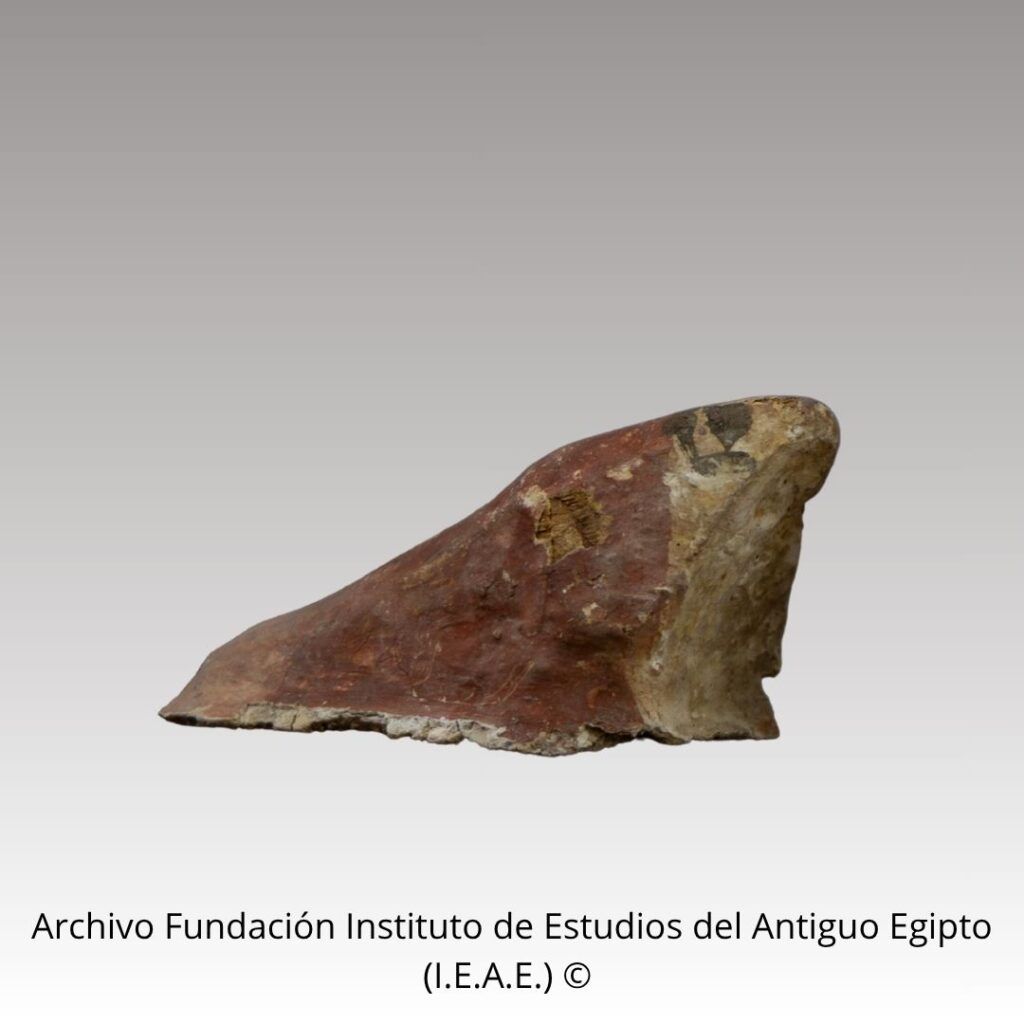
El halcón (pájaro Ajem), representa a Sokar, el antiguo dios de la necropolis de Menfis, cuya forma animal era un halcón.
La presencia del pájaro en la base de la figura Ptah-Sokar-Osiris aseguró la protección del difunto en el Más Allá.
The god Sokar was part of the imagery of the god Ptah-Sokar-Osiris, a syncretic deity that combined the creative power of Ptah, the chthonic authority of Sokar, and the promise of resurrection from Osiris. This reflects the trend, beginning in the Third Intermediate Period, of merging divine attributes to achieve maximum funerary efficacy, expressing a clear sign of religious syncretism.
The falcon (Ajem bird) represents Sokar, the ancient god of the Memphis necropolis, whose animal form was a falcon. The presence of the bird at the base of the Ptah-Sokar-Osiris figure ensured the deceased’s protection in the afterlife.
Detalles de la pieza / Artwork Details:
La talla es de madera, estucada y pintada. Los colores, el rojo para el cuerpo y la cabeza azul- verdosa, evocan la magia protectora. Tiene marcado la zona de los ojos, formando al mismo tiempo un ojo Udjad.
El pequeño halcón, es de factura tosca y rápida. Los contornos, no son nítidos aunque los pigmentos sobreviven. Se aprecia en negro, el inicio del ojo, pero también realizado de forma rápida y sin definir. La figura es un testigo del poder sincrético de Ptah, Sokar y Osiris, cuyos roles combinados prometían creación, protección y resurrección. En su forma preservada, pequeño, pintado y decidido, el halcón encarna la convicción desde el Tercer Periodo Intermedio, de que el alma podía ascender como un pájaro, salvaguardado por la deidad compuesta cuya estatua una vez coronó.
Evoca la resurrección este dios ‘el sol difunto’ en la quinta hora del Libro del Amduat.
The carving is made of wood, stucco and painted. The colors—red for the body and blue-green for the head—evoke protective magic. The eye area is marked, forming a Udjad eye.
The small falcon is roughly and quickly executed. The outlines are not sharp, although the pigments survive. The beginning of the eye is visible in black, but also quickly and undefined. The figure bears witness to the syncretic power of Ptah, Sokar, and Osiris, whose combined roles promised creation, protection, and resurrection. In its preserved form—small, painted, and resolute—the falcon embodies the belief, dating back to the Third Intermediate Period, that the soul could ascend like a bird, safeguarded by the composite deity whose statue it once crowned.
This god, «the dead sun,» evokes resurrection in the fifth hour of the Book of Amduat.
Ficha técnica / Overview:
Campaña / Season: 2023
Título/ Title: Sokar/ Sokar
Periodo/ Period: Tercer Período Intermedio 1069-664 a.C. / Third Intermediate Period 1069-664 b.C.
Cronología/ Chronology: XXI Dinastía – 656 a.C. / XXI Dynasty 656 a.C.
Procedencia / Origin: Lúxor. Tumba del Visir Amen-Hotep Huy AT-28- B/C. Asasif. Luxor West Bank.
Actualidad / Present : Luxor Museum.
Materia/Materials: talla de madera policromada./ Polychrome carved wood.
Dimensiones/ Dimensions: 10 cm. x 4 cm. x 4 cm.
Nº Registro: AT-28-B/C 400-23.
Paralelos / Parallels:
- Museo de Arte de Luxor, nº inv. 10336-16; 10290-16;
Bibliografía / Bibliography:
- Bedman, T. Martín-Valentín, F y El Menshawy, A. (Eds.): Los Tesoros del Visir Amen-Hotep Huy. Catálogo de la Exposición, El Cairo, 2021.
-
Shaw, I. Historia del Antiguo Egipto. Madrid, 2003, 626-627.
Por: Teresa Bedman y Florencia Nicolari.